UC contributes $82 billion in economic impact and supports more than 500,000 jobs.
1.1.1 The economic impact of UC in California

The University of California: Systemwide economic, fiscal, and social impact analysis, 2021 report
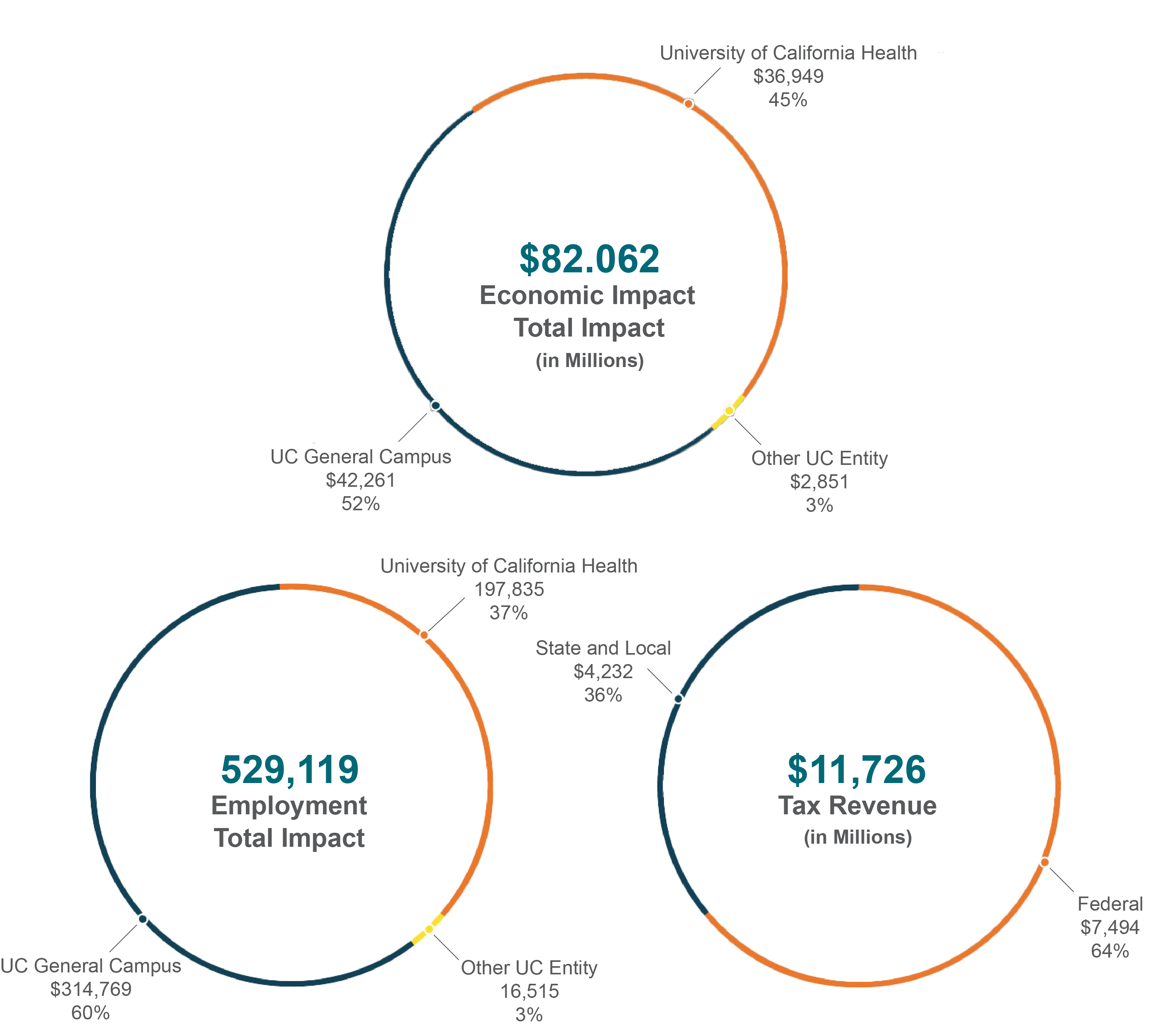
source: The University of California: Systemwide economic, fiscal, and social impact analysis, 2021 report

The University of California is a powerful economic engine, contributing significantly to the State’s vibrancy and economic strength. According to a 2021 economic impact report, UC’s presence supports over half a million jobs, or one in every 45 across the state. UC also delivers a remarkable return on investment — every dollar invested in UC by the state yields more than $21 in economic output. Beyond employment and economic output, UC-related spending contributes nearly $12 billion in federal, state, and local tax revenues each year, further underscoring UC’s vital role in bolstering California’s economy.
The University of California has broad impact across all regions of California.
1.1.2 UC impact – a regional approach to demonstrating the University’s impact on communities

UC impact in California regions
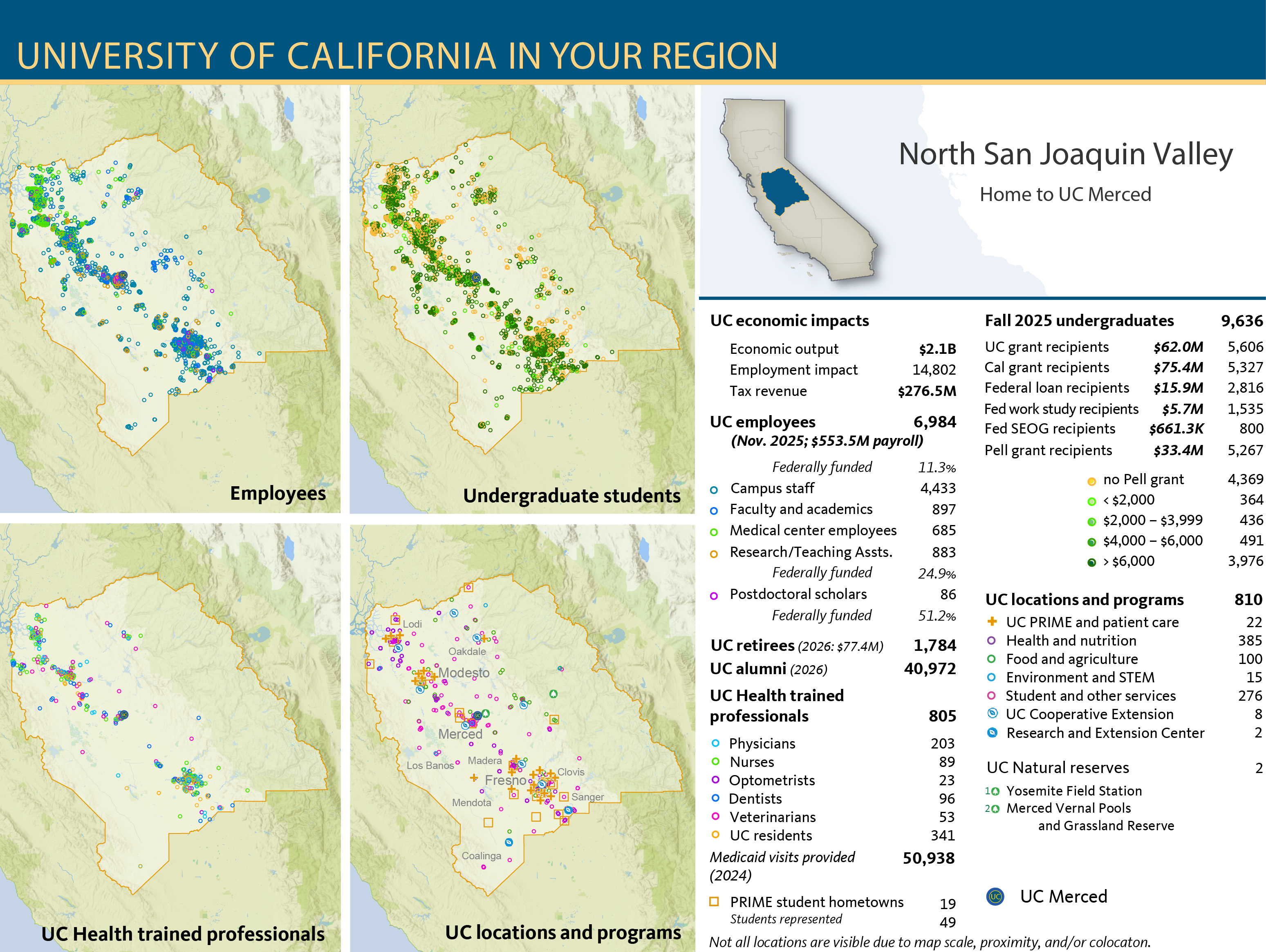
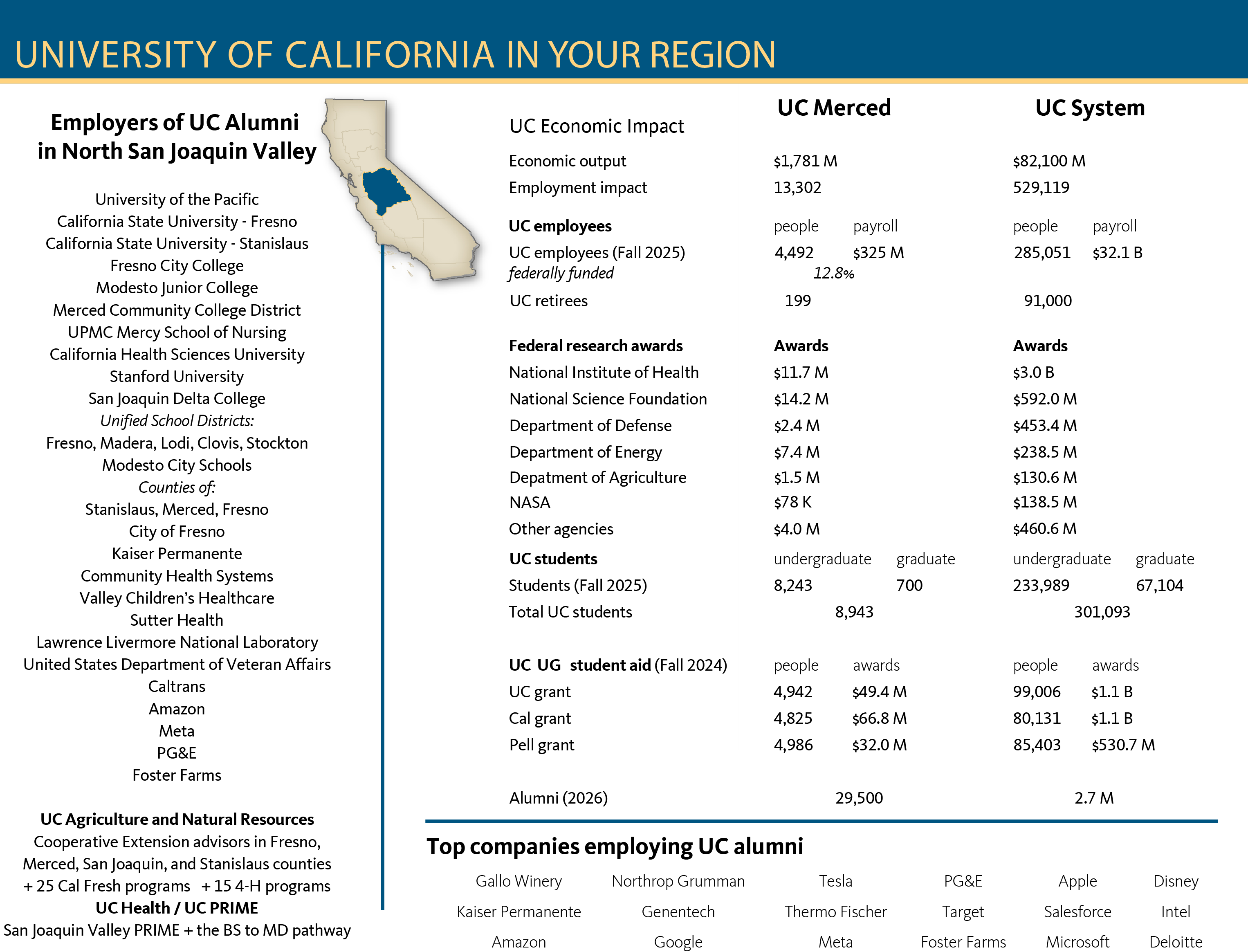
sources: The University of California: Systemwide economic, fiscal, and social impact analysis, 2021 report,
UCPath, UC RASC, UC student corporate systems, UC campus alumni offices
The social and economic impact of UC cannot be overstated. From the more than seven thousand UC-administered community-based program sites in California, the 47,000 acres of natural reserves set aside for research and conservation, to the tens of thousands of UC-trained health care professionals and the more than six million Medicaid visits provided annually by UC’s health enterprise, the University enriches every facet of Californians’ lives.
The map above left, of the North San Joaquin Valley (along with thirteen other California regional maps), was developed in 2026 to illustrate a holistic picture of this impact as the University endeavors to counter the threats to its budget, its academic freedom, and its commitment to serve the people of California. The companion data page, above right, provides information on top employers of UC for the region, by campus, and for the system; data on federal research awards and student aid are also provided.
UC graduates double their earnings on average within ten years, with median earnings greater than median earnings of other degree holders in California.
1.2.1 California comparison on UC undergraduate alumni impact in CA

UC undergraduate alumni outcomes in California dashboard
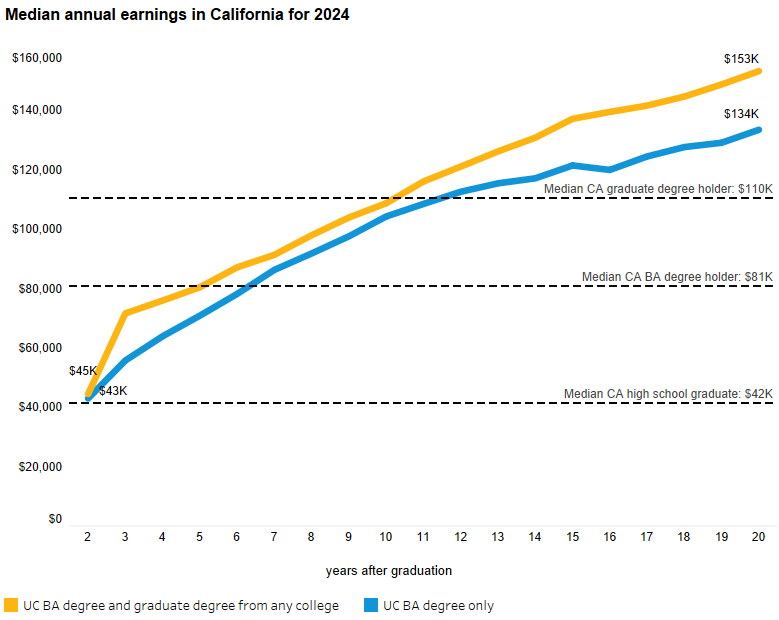
source: UC Information Center
UC graduates more than 60,000 bachelor’s degree recipients each year, and 70 percent of them go on to work in California after graduation. They have median annual earnings of $43,000 directly out of UC and go on to more than double their earnings within ten years. UC alumni who go on to earn a graduate degree achieve even higher earnings.
Median earnings of UC alumni are greater than other degree holders in California — at six years, median earnings of UC alumni are $78,000, surpassing all California bachelor’s degree recipients and $113,000 by year twelve, more than all graduate degree holders in the state. Over a 20-year period, UC bachelor’s degree recipients will earn over $2 million in cumulative earnings — that’s $1.23 million more than California high school graduates and $439,000 more than California bachelor’s degree recipients.
UC alumni work across California in critical occupations within public agencies, nonprofits, major businesses, and new startups.
1.3.1 UC alumni location with top employers, job titles, and estimated earnings
UC alumni career pathways dashboard | Map and earnings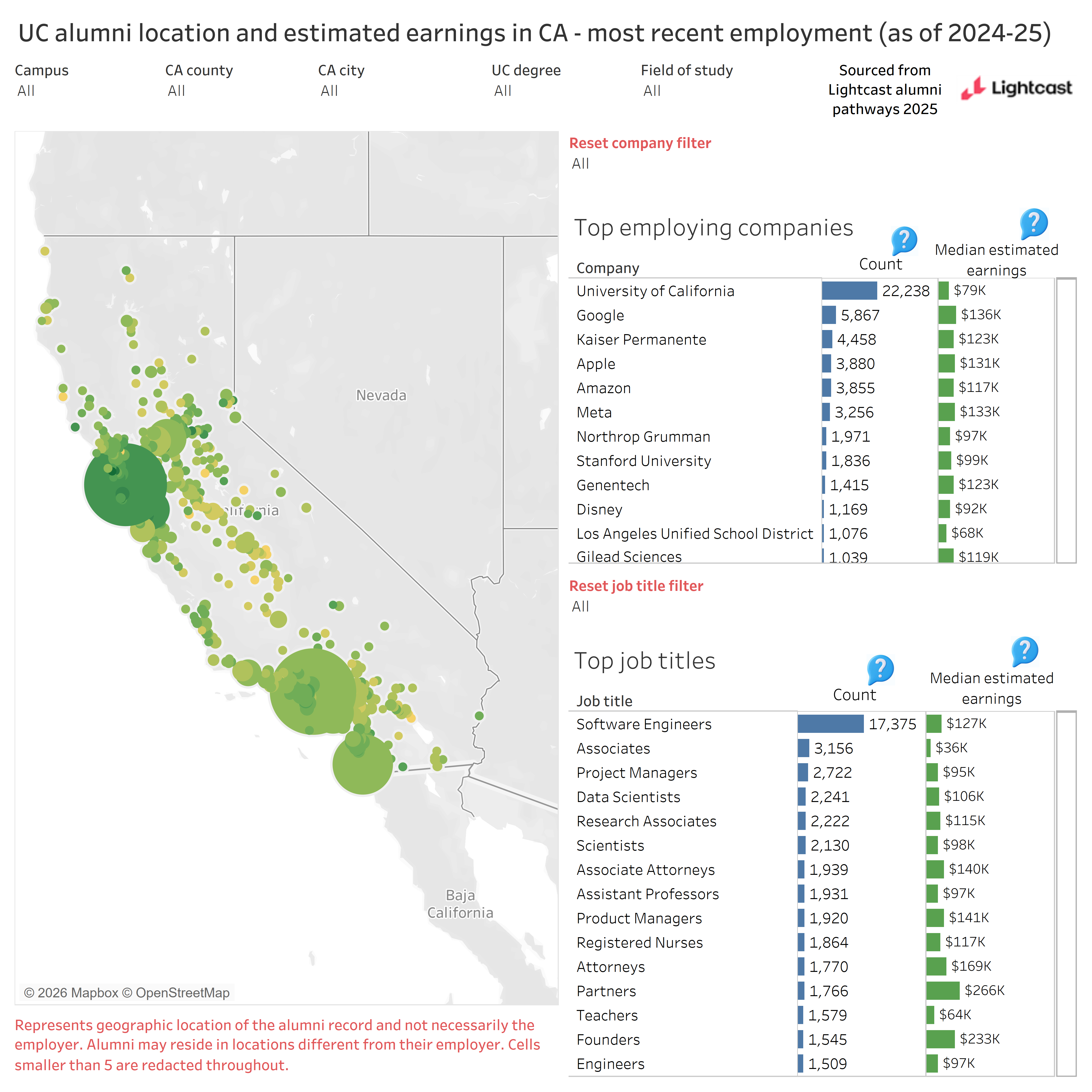
sources: Lightcast and UC Information Center
Educational institutions often employ UC alumni. The University is the top employer of UC graduates, in part because occupations include teaching and research positions held while students are pursuing a graduate degree. UC is also the second-largest employer in the state, so alumni can be seen holding faculty, postdoctoral researcher, and other university positions.
Other top employers of UC alumni are federal, State, and local governments, agencies, and school districts. UC alumni are also major contributors to critical California industries and businesses, including Google, Kaiser Permanente, Amazon, Meta, Apple, Disney, and Microsoft. These big technology companies rely on graduates of UC STEM programs at both the undergraduate and graduate levels for roles such as software engineering, data science, and research and design.
UC bachelor’s graduates contribute to a wide range of California industries, including health care, education, technology, and public administration.
1.3.2 Industry of employment of UC bachelor’s graduates by years after graduation, Universitywide, for 2001–02 to 2021–22 graduating cohorts
UC undergraduate alumni outcomes in California dashboard | Industries
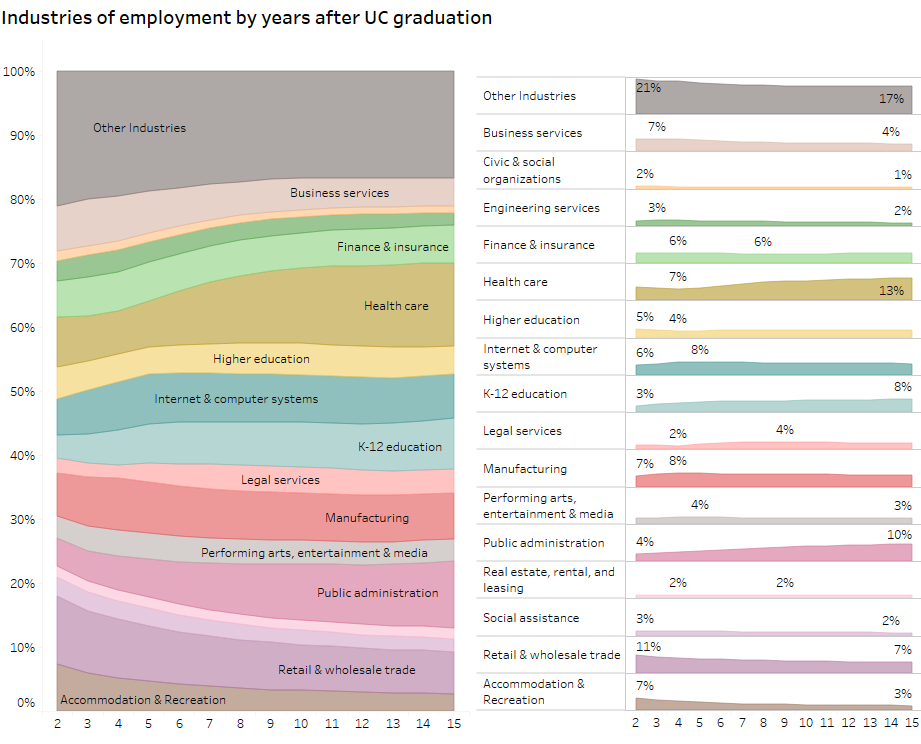
source: UC Information Center
UC bachelor’s graduates employed in California contribute to a wide range of industries. Two years after graduation, alumni are more concentrated in retail and wholesale trade, accommodation and recreation, business services, and other industries. As graduates progress in their careers, the employment distribution shifts: the share working in these early-career sectors declines, while the share working in health care, public administration, K-12 education, legal services, and internet and computer systems increases.
These shifts show how UC graduates contribute to industries that are central to California’s economy and public services. The share of alumni working in health care roughly doubles over time, and public administration and K-12 education also grow as destinations for UC graduates. This pattern reflects UC’s role in preparing graduates for both private-sector and public-serving careers, including fields that support the state’s health, education, technology, legal, and government workforce needs.
Nearly half of UC academic doctoral and master’s graduates in the arts, humanities, and social sciences who remain in California work in higher education.
1.3.3 Industry of employment of UC graduate academic students in California, by year after graduation, Universitywide, 2000 to 2022 graduating cohorts
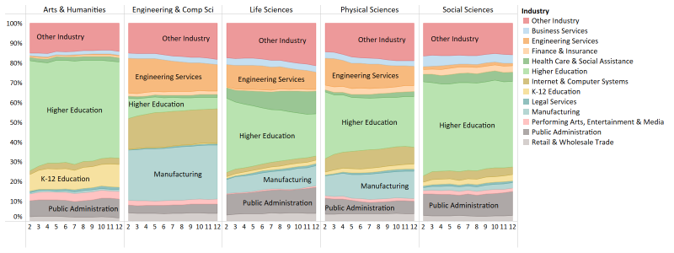
sources: California Employment Development Department and UC Corporate Student System
Graduates of UC academic doctoral and master’s degree programs go on to work in a broad range of industries in California. Large proportions of graduates in most disciplines go on to work in higher education ten years after graduation — 49 percent of Arts & Humanities, 43 percent of Social Sciences, 24 percent of Physical Sciences, and 22 percent of Life Sciences academic doctoral graduates work in higher education in California. Engineering and Computer Science academic doctoral and master’s graduates who stay in California are more likely to work in a broader set of industries, including manufacturing (27 percent), internet and computer systems (17 percent), and engineering (14 percent) ten years after graduation.
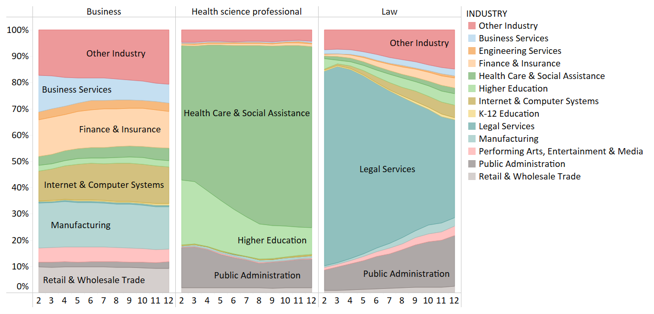
UC professional programs prepare graduates for careers closely related to their field of study, particularly health care, legal services, and technology.
1.3.4 Industry of employment of UC graduate professional students in California, by year after graduation, Universitywide, 2000 to 2022 graduating cohorts
sources: California Employment Development Department and UC Corporate Student System
High proportions of UC’s law school and health sciences graduates go on to work in the legal or health care and social assistance fields, respectively (ten years after graduation, 44 percent in legal services for law graduates and 68 percent in health care & social assistance for health science professionals). Graduates of UC Master of Business Administration (MBA) programs go on to work in a wide range of fields in California, including manufacturing (16 percent), internet and computer services (15 percent), finance and insurance (14 percent), and business services (eight percent) ten years after graduation.
UC-trained health care professionals practice throughout the state, contributing to California having the highest physician retention rate in the nation.
1.3.5 Location of 28,799 physicians, nurses, optometrists, dentists, veterinarians, and UC medical residents trained by UC since 1999 and currently licensed in California, 2023
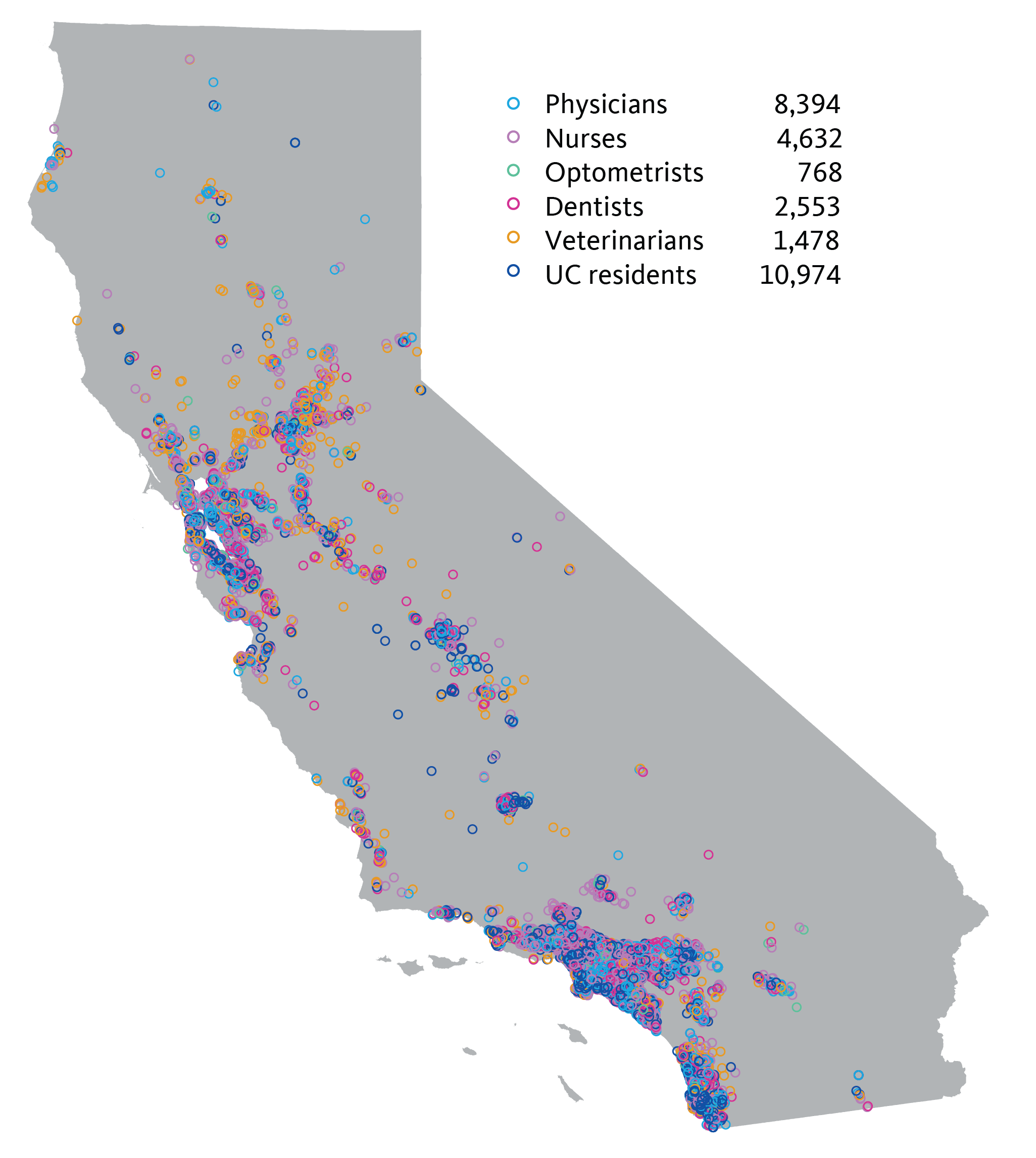
sources: UC corporate student system and the CA Department of Consumer Affairs, as of 2023
UC health professional school programs are a significant resource for training new health care professionals to serve across the state.
Seventy percent of UC medical school graduates go on to practice as licensed physicians in California, contributing to California having the highest physician retention rate in the nation. Data from the Association of American Medical Colleges shows that 78.5 percent of residents who completed their training in California from 2014 through 2023 are practicing in the state.
UC-sponsored residency and affiliated family medicine programs provide close to forty percent of residency training positions in the state. In 2025, forty percent of UC medical students will go on to continue their residencies at UC locations.
UC’s health professional school training programs are critical to expanding access to health care services for communities across the state.
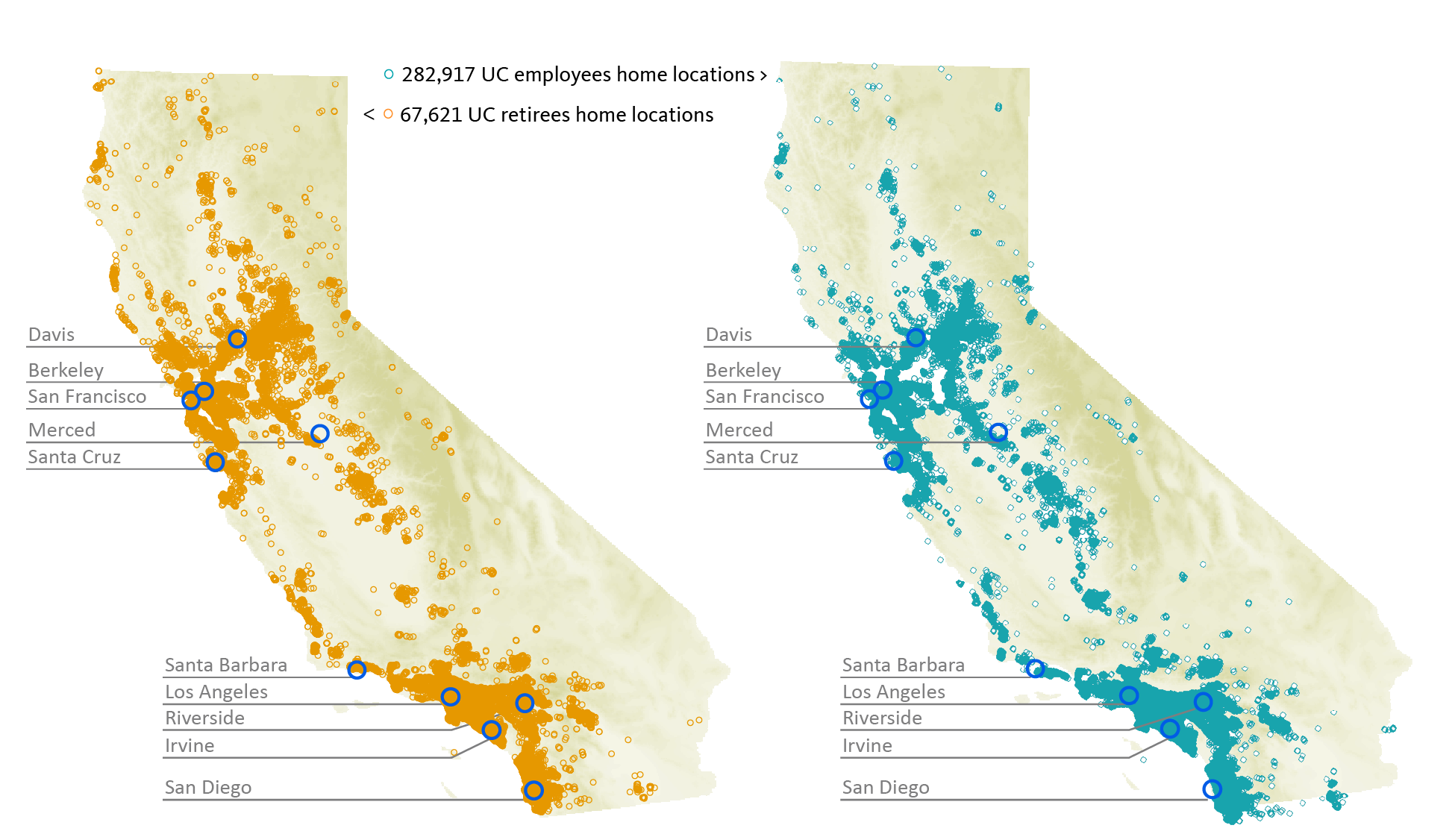
UC is the second-largest employer in California, with 282,917 employees and 67,621 retiree beneficiaries residing within the state.
1.3.6 California resident retiree beneficiaries and faculty, academics, and staff employees
sources: UC RASC and UCPath
As California’s second-largest employer, the University of California employs 282,917 California residents with an annual payroll of nearly $32 billion. With employees residing throughout the state, UC’s economic impact goes well beyond its ten campus locations. Members of its workforce purchase goods and contribute to local economies across the state.
Of the more than 91,000 current UC retirees and beneficiaries, more than 67,000 reside in California with annual benefits totaling $3.7 billion, and their UC pension benefits contribute to the communities in which they reside.
notes: The employee headcount includes all employees irrespective of their pay status and covers employee sub-segments like those who are on sabbatical, unpaid leave, as well as new hires who may not have received their first paycheck yet, and employees from the acquired hospital locations.
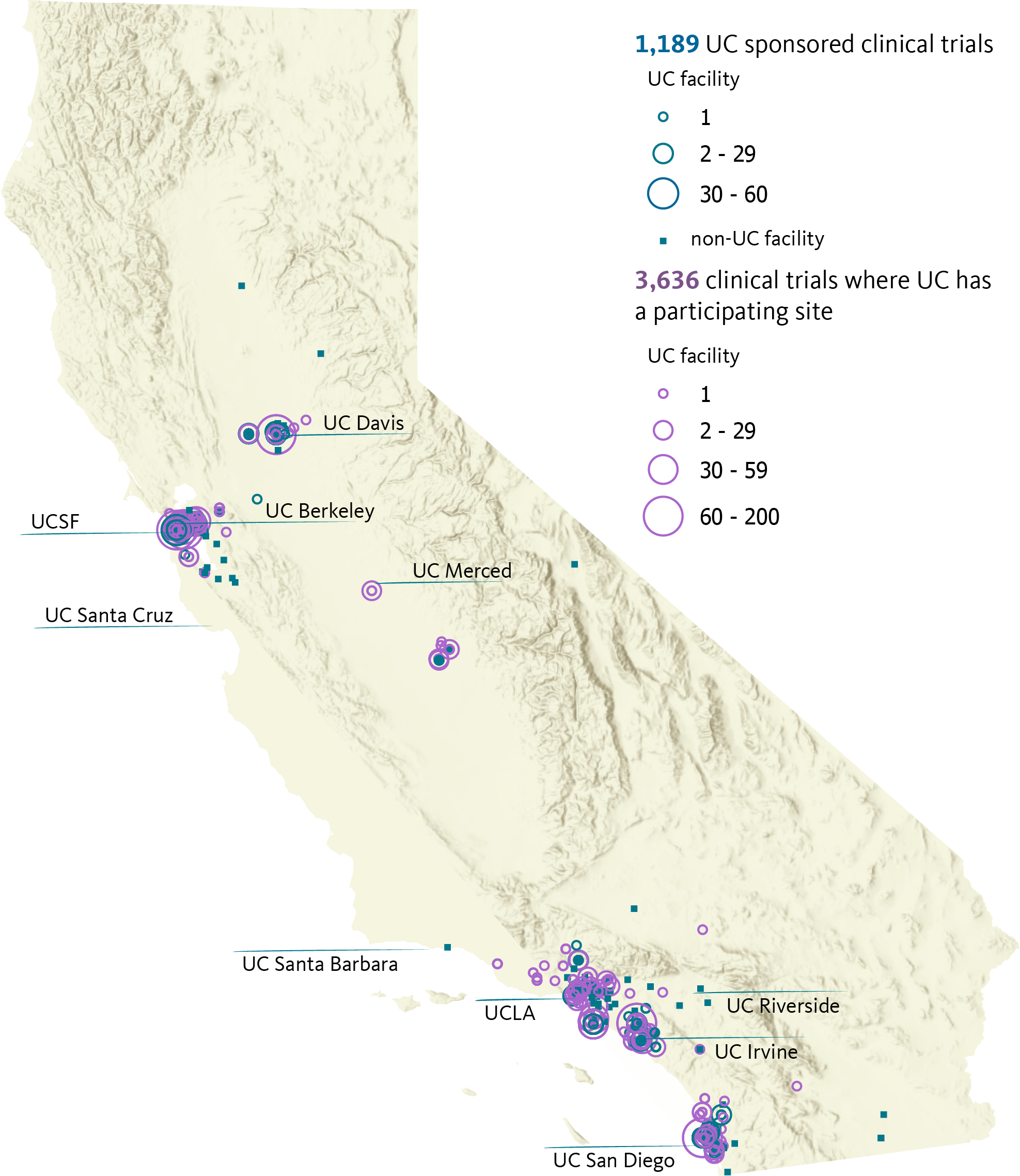
The University of California participates in 4,825 active clinical trials in California by direct sponsorship or facilities support.
1.4.1 University of California-affiliated clinical trials in California
sources: UC BRAID’s UC Health Clinical Trials dataset and UC Information Center
The University of California sponsors 1,189 clinical trials at UC and other facilities in California. In addition to these direct sponsorships, UC locations are participating sites in 3,636 trials conducted by other organizations, including biotechnology companies, nonprofits, other colleges and universities, and government agencies.
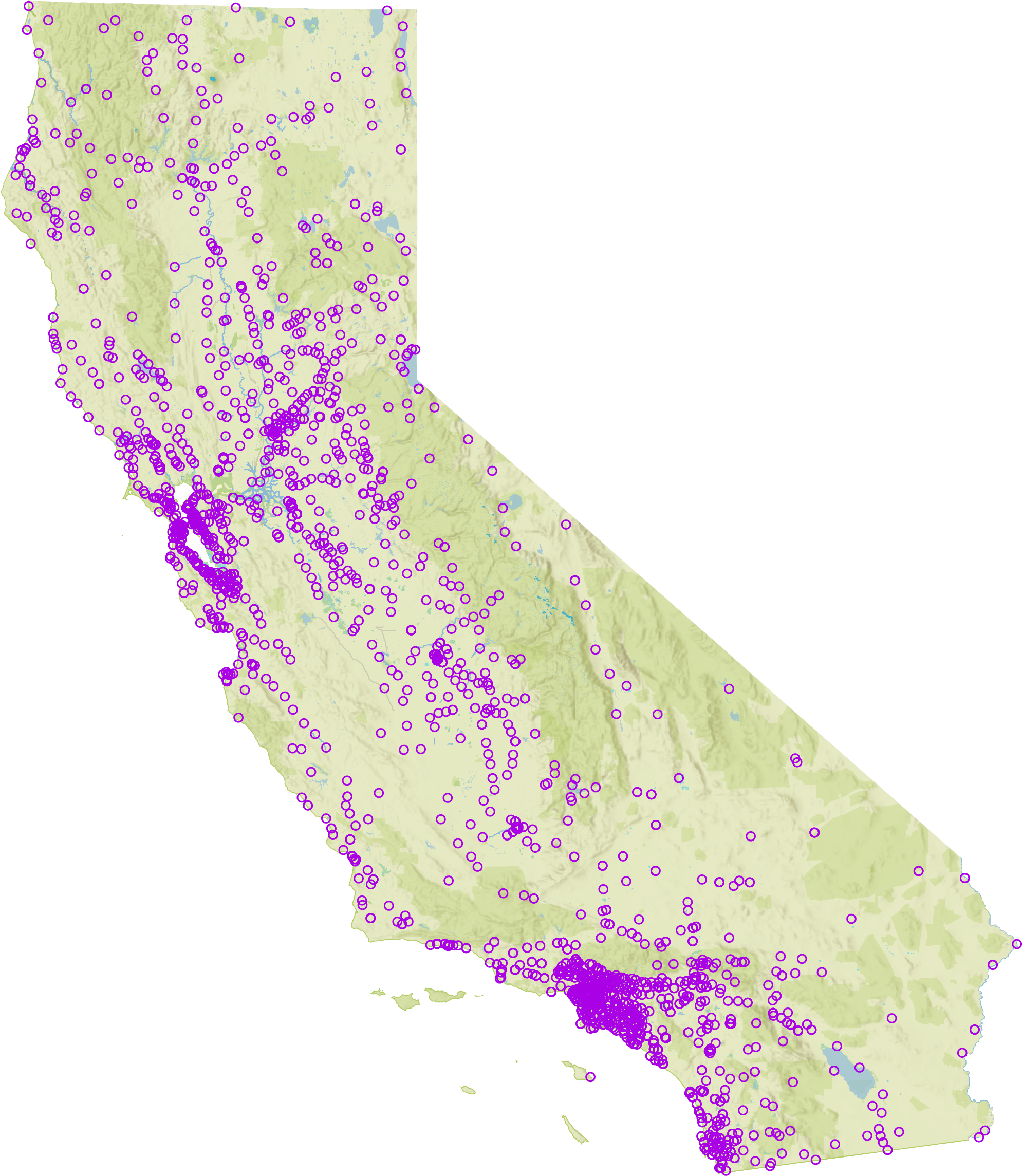
UC’s health locations served patients from 99 percent of California’s zip codes in FY 2025–26.
1.4.2 Distribution of California zip codes served by UC Health
source: CD12 UC Health data warehouse
UC’s academic health centers play a significant role in caring for people who come from across California. These centers care for patients’ everyday health needs, as well as those with the most complex cases.
1.5 UC ALUMNI
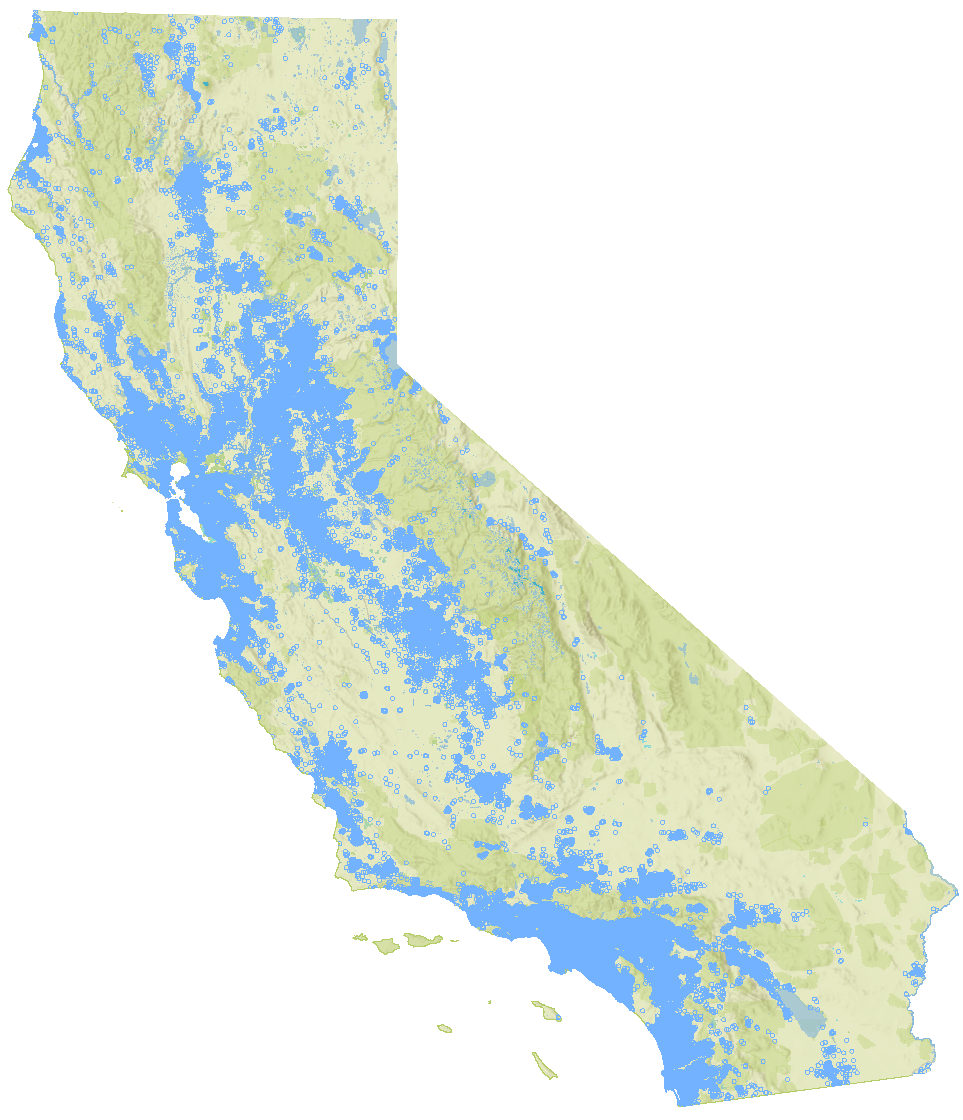
There are 2,062,352 alumni living in California.
1.5.1 UC alumni living in California, 2026
source: UC campus alumni offices
The University of California has more than 2.7 million alumni living and working around the globe, with about 75 percent of UC alums living in California. They are leaders and contributors to the vitality of our communities, our businesses, and our culture.
For more information

Explore the UC Information Center dashboards that provide downloadable data and context about the University of California
universityofcalifornia.edu/about-us/information-center
In addition to those dashboards supporting indicators in this chapter, other examples include:
- UC 2030 dashboard
shows the UC 2030 goal in UC’s multi-year framework
- UC inventions at a glance
UC technology commercialization benefits the public by transforming UC inventions into innovative products and economic impacts
- UC longitudinal alumni dashboard
The UC longitudinal alumni dashboards visualize the enrollment, course and major choice, and long-run wage and employment outcomes of the hundreds of thousands of undergraduate students who have enrolled at the University of California since the 1960s
Download data tables for chapter 1 indicators (Excel format)
Chapter One: Impact
Key takeaways:
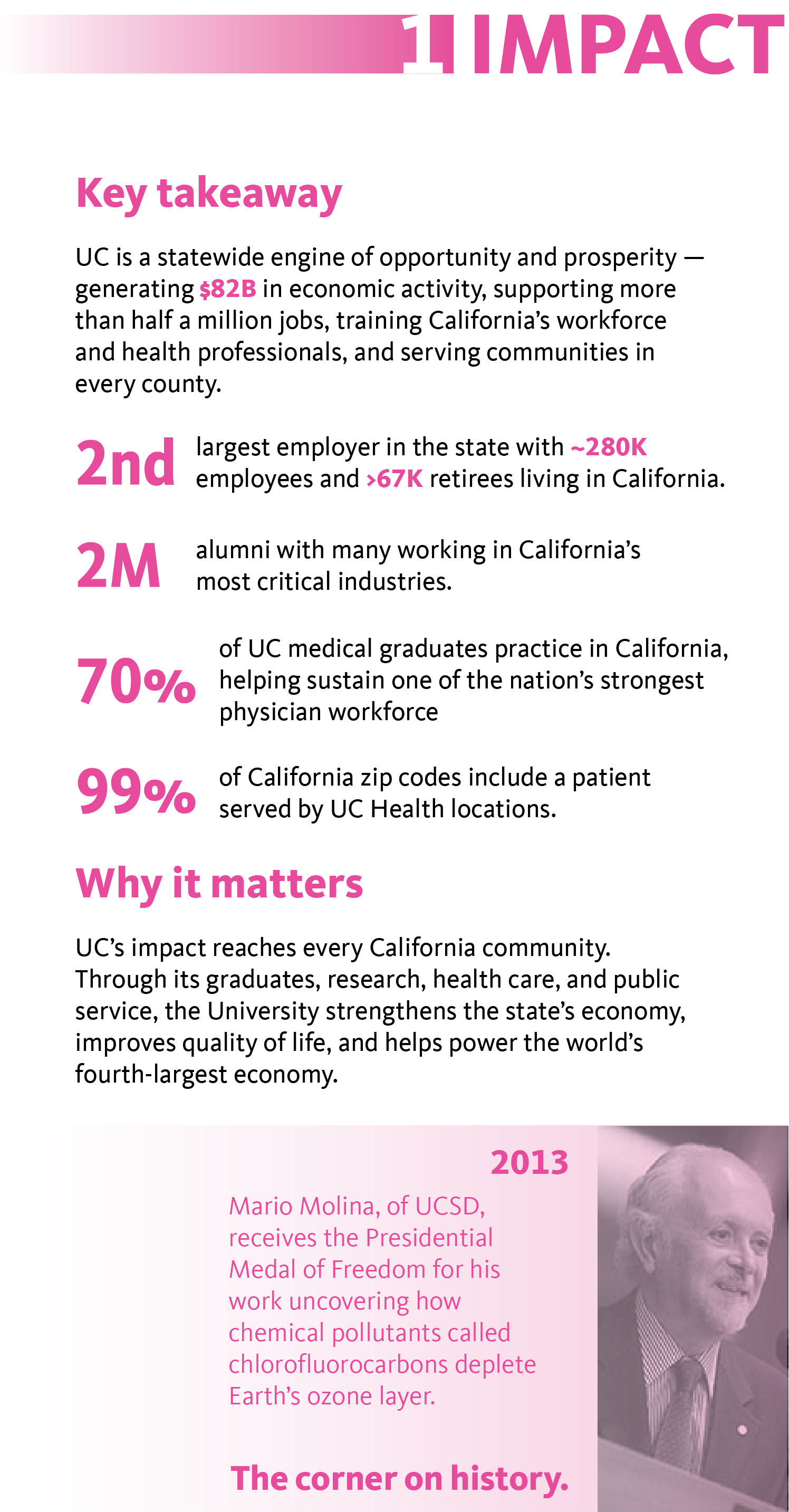
- UC is an engine of opportunity and prosperity for California — generating $82 billion in economic activity, supporting more than half a million jobs, training California’s workforce and health professionals, and serving communities in every county.
- UC is the second largest employer in the state with about 280,000 employees and more than 67,000 retirees living in California.
- There are more than two million UC alumni with many working in California’s most critical industries.
- Ninety-nine percent of California zip codes have at least one patient served by UC Health locations.
- Seventy percent of UC medical graduates practice in California, helping sustain one of the nation’s strongest physician workforces.
Why it matters:
UC’s impact reaches every California community. Through its graduates, research, health care, and public service, the University strengthens the state’s economy, improves quality of life, and helps power the world‘s fourth-largest economy.
UC’s corner on history:
In 2013, Mario Molina, of UCSD, received the Presidential Medal of Freedom for his work uncovering how chemical pollutants called chlorofluorocarbons deplete Earth’s ozone layer.