Executive Summary

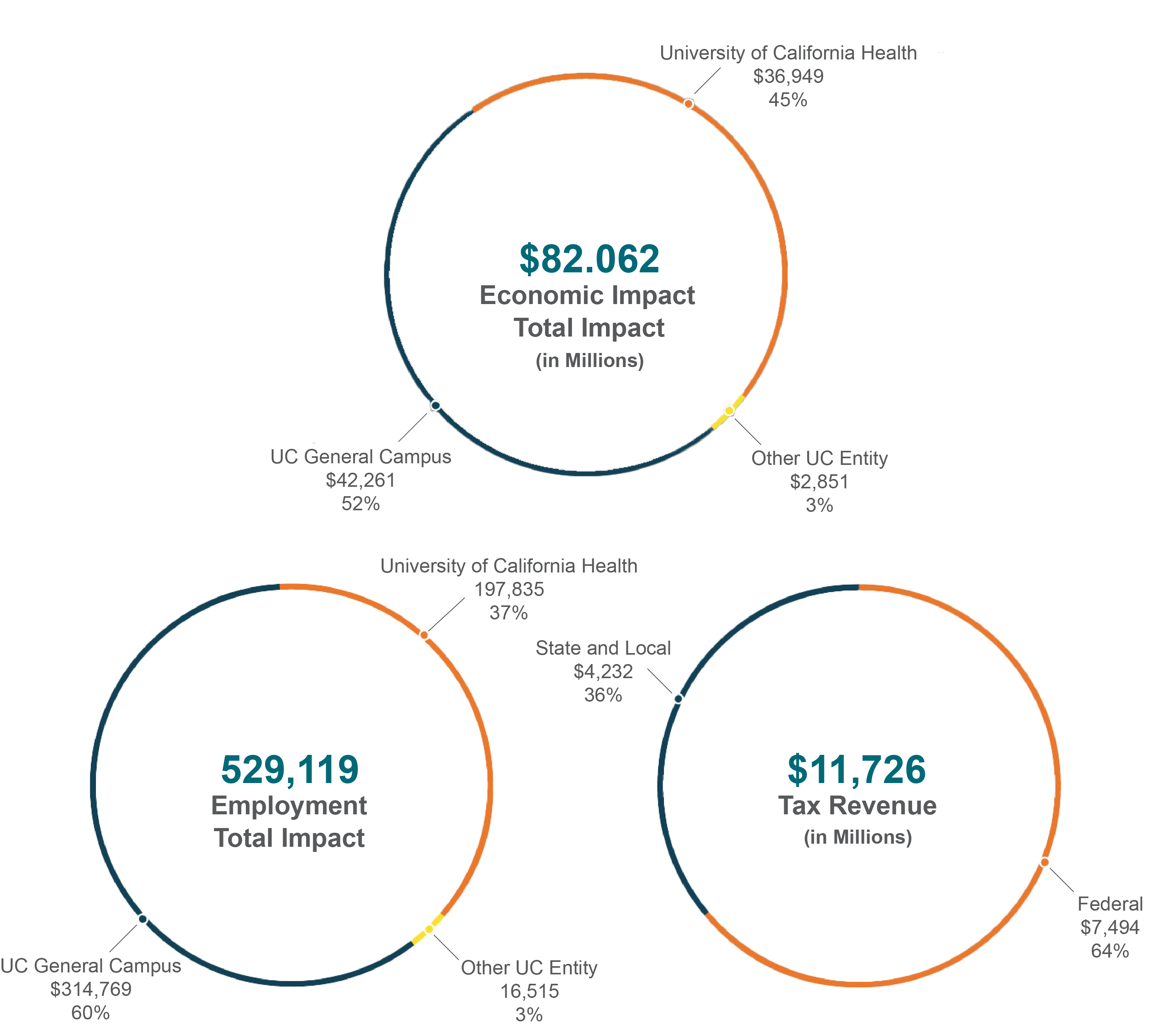
The mission of the University of California (UC) is to improve lives through education, research, health care, and service to the people of California and beyond. For almost 160 years, the University has stayed true to that mission, becoming an essential partner with the state. The productive partnership between California and UC illustrates how investments made by the state and its citizens produce immense returns in helping to strengthen and grow California’s economy. The University’s fiscal impact includes $82 billion in overall economic activity. Half a million jobs in California — or one in every 45 — are supported by University activities (1.1.1).
Increasingly, however, state leaders and the public are asking more about how the University operates and performs — whether our students succeed, how we support the state’s workforce needs, how funds are spent, and whether our decisions align with the University’s mission and the needs of California communities. The annual UC Accountability Report is one way the University tracks its progress towards its shared goals, while also providing greater transparency about key UC operations and trends. Currently, many of the indicators in the report can also be found on the UC Information Center. To assist state leaders and the public in digesting the vast array of data presented, this year’s Accountability Report includes a one-page summary at the start of each chapter that highlights the chapter’s key takeaways and issues to monitor going forward.
This year’s Executive Summary highlights UC’s efforts to serve the people of California through opportunity, education, and discovery. UC’s longstanding partnership with the state, particularly in terms of shared goals and sustained investment, are critical to the University’s success and impact.
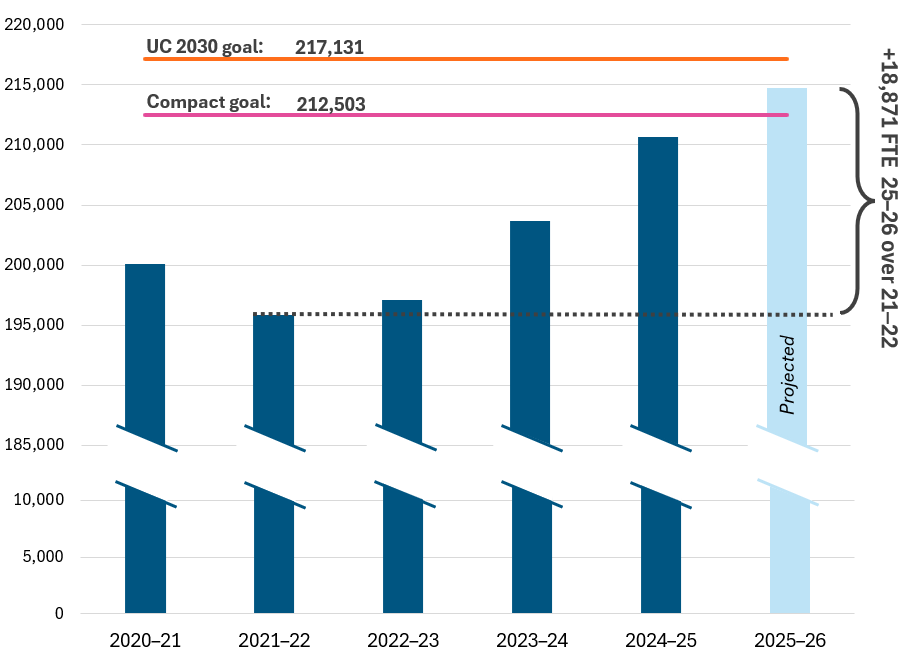
The University and the State share a longstanding goal of expanding access to a UC education. This shared goal begins with the California Master Plan for Higher Education, which was adopted in 1960 and calls for UC to admit all eligible freshmen and transfers. More recently, the UC 2030 capacity plan proposed to grow the undergraduate resident population from 200,000 full-time (FTE) students in 2020–21 to 217,000 in 2029–30.
With the Governor and the Legislature having funded a multi-year enrollment plan through a Compact and funding allocations in the annual state budget, the University has made significant progress towards meeting its 2030 enrollment goals. Over the last five years, UC will have added nearly 19,000 California FTE students — amounting to adding a new campus without building one. Over 84 percent of UC undergraduates are California residents (2.1.5b).
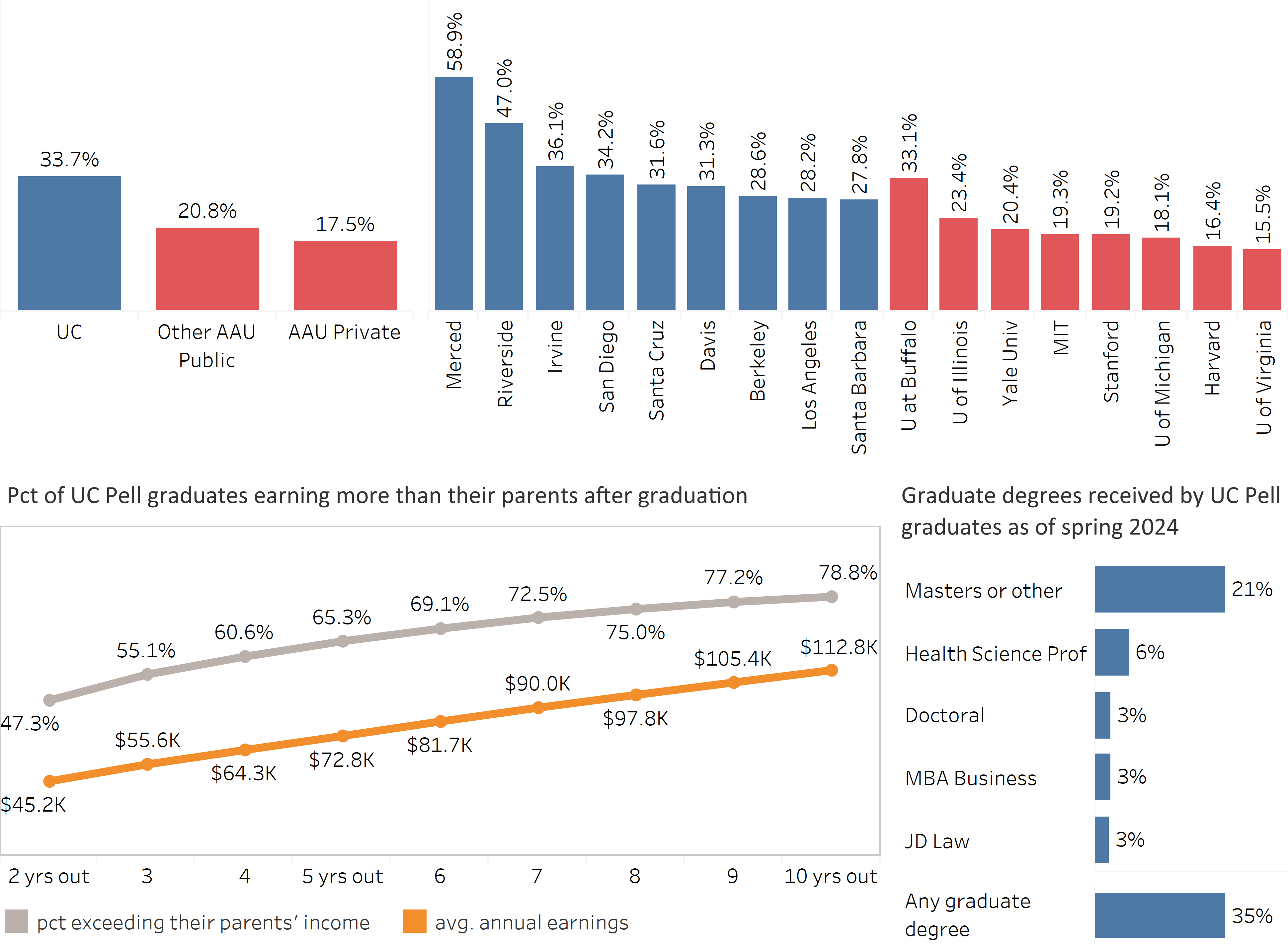
In partnership with the state, the University has prioritized making undergraduate degrees affordable for low-income students. UC tuition is comparable to public flagship universities, but UC students receive greater financial support through UC’s Blue and Gold financial aid program, the state’s Cal Grant and Middle-Class Scholarship programs, and the federal Pell Grant program. Thirty-four percent of UC undergraduates are Pell Grant recipients, a higher percentage than the non-UC American Association of University (AAU) public or private peer average at 21 percent and 18 percent respectively. Furthermore, most UC Pell graduates surpass their family earnings by three years after graduating and go on to more than double their earnings within ten years of graduating. Nearly 80 percent of UC Pell graduates earn more than their parents did while they were enrolled at UC (3.2.1).
In fall 2022, the University established the Tuition Stability Plan, which helps families better manage costs by holding tuition flat over the course of a student’s education, up to six years. The plan also provides new financial aid resources for low-income students. In addition, and consistent with the shared goals in the Multi-Year Compact between the Governor and the University, UC has focused efforts to expand debt-free pathways for undergraduate students and reduce non-tuition expenses such as textbooks, housing, food, and transportation.
Today, 68 percent of UC undergraduates graduate with no student loan debt (more than 20 percentage points higher than a decade ago). For those who do borrow, the average student loan debt at graduation in 2024–25 was about $18,800. On average, UC graduates carry $10,000 less debt than graduates from peer institutions — and the gap has been widening. Between 2012–13 and 2024–25, the gap in average debt between UC and public comparators grew from $4,000 to $10,000. Peer institution average debt rose 13 percent in nominal terms while UC’s declined.
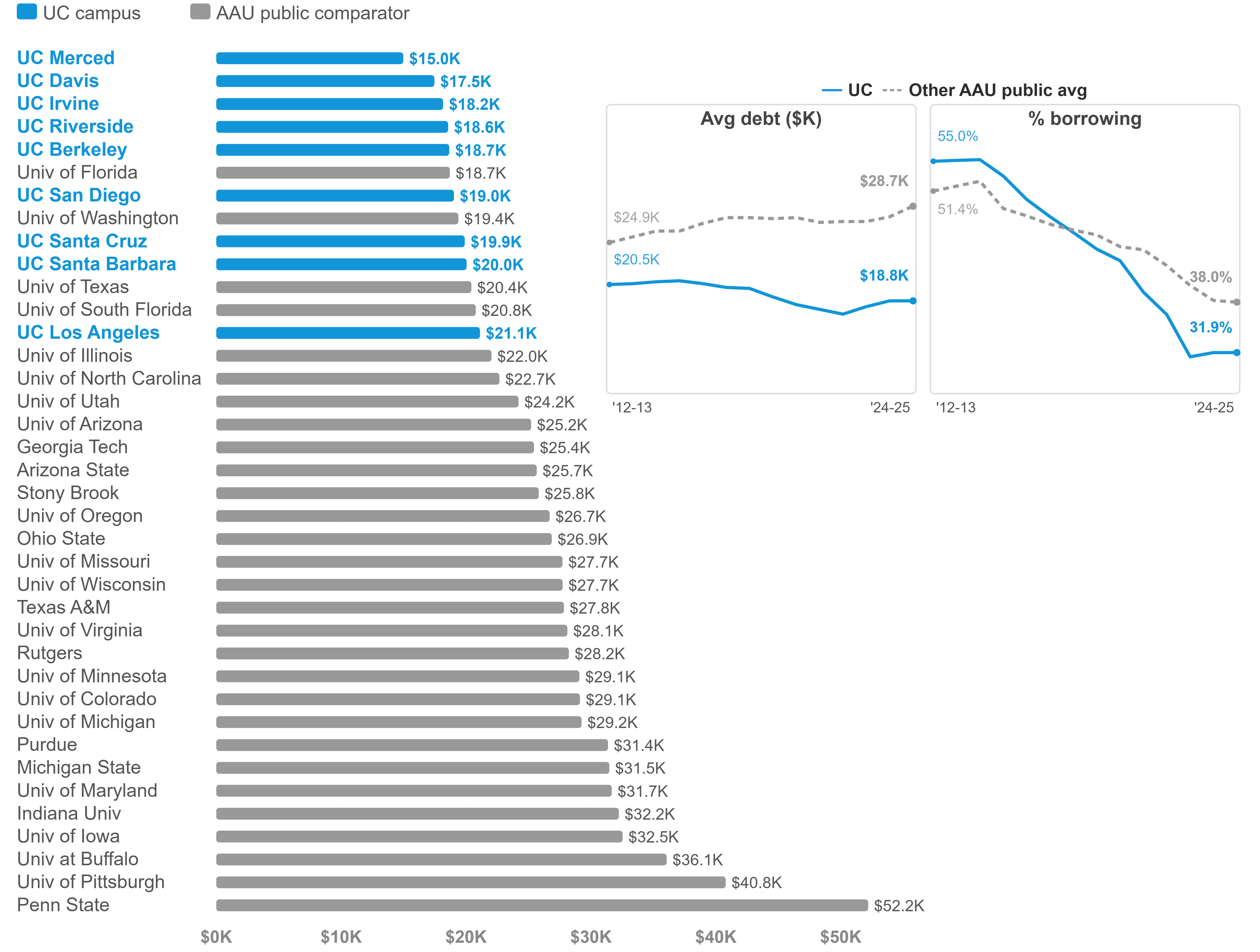
Undergraduate debt at graduation, UC and public comparators, UC and public comparison institutions, 2024–25 or most recent data available (3.3.2).
The University maintains a long-standing partnership with the state to improve student success. The Multi-Year Compact with the Governor has provided sustained funding to improve timely graduation, sustain high retention, and promote more equitable graduation and retention outcomes across student groups. Investments have been made to improve academic advising, increase course access, embed learning assistants in high-enrollment math and chemistry courses, and expand other support programs.
Timely graduation reduces the cost of a UC degree, providing earlier entry into the labor market and making it far more likely that a student will go on to earn a graduate degree, both of which significantly increase their lifelong earnings. The current four-year graduation rate for freshmen is 74 percent, meeting the 2025–26 Compact goal and nearing the 2030 goal of 76 percent (4.1.1). The current two-year graduation rate for transfers is 67 percent, meeting the 2025–26 Compact goal and nearing the 2030 goal of 70 percent (4.2.1). A critical component to achieving these goals is improvements in the graduation rates for Pell, first-generation, and underrepresented students. Existing gaps in rates between most subgroups have slightly declined for freshman entrants but still persist. These gaps can be explained by differences in academic preparation rather than student characteristics (4.1.8 and 4.2.5).
Recent retention rates are high, at 93 and 95 percent for freshman and transfer students, rebounding after a drop in retention rates seen during the COVID-19 pandemic. Retention has also improved for first-generation students, Pell Grant recipients, and students from racial/ethnic groups historically underrepresented in higher education since the pandemic-era lows, though small differences remain. (4.1.11 aand 4.2.7).
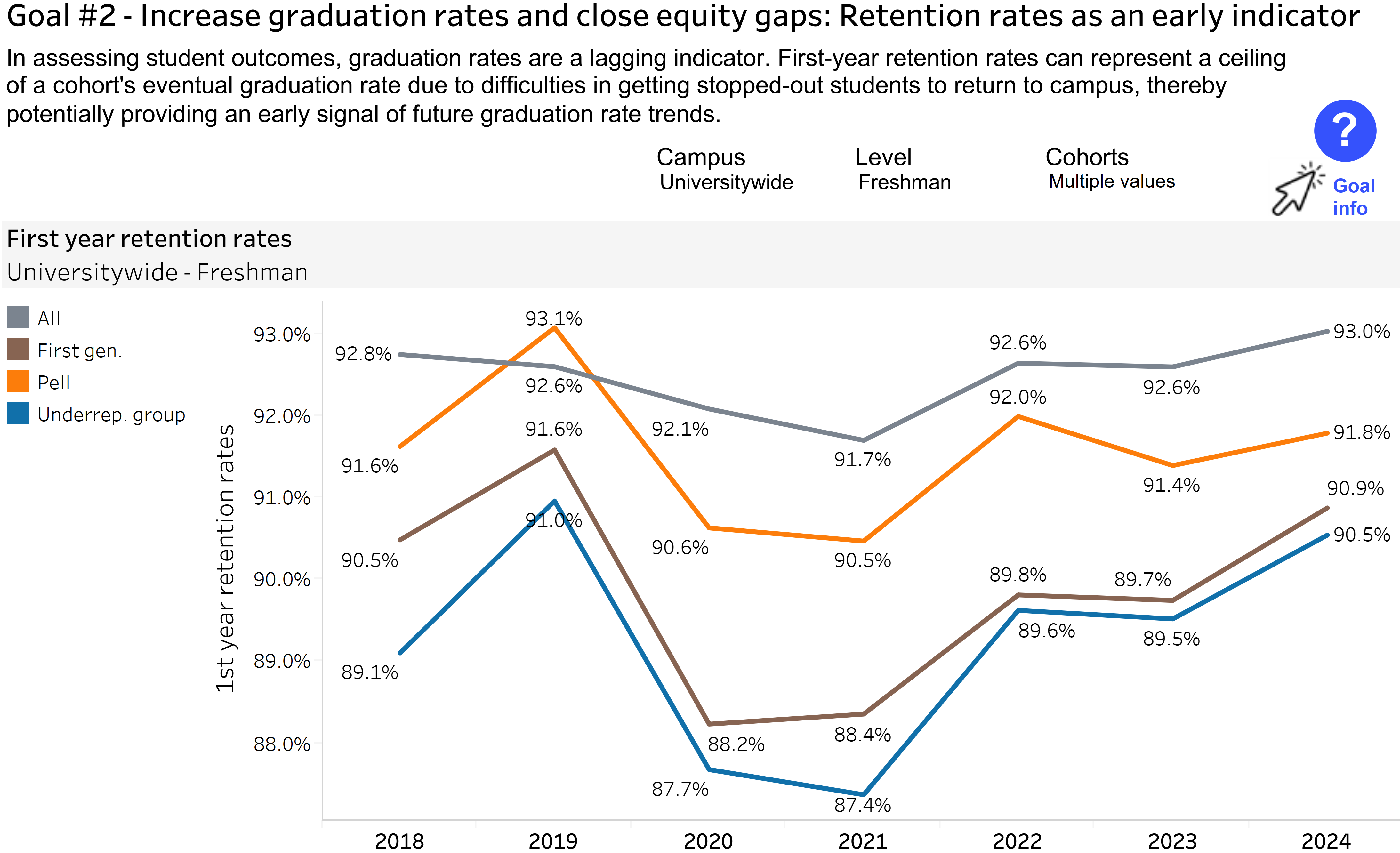
Freshman four-year graduation rates by student group and exit cohort year (4.1.11)
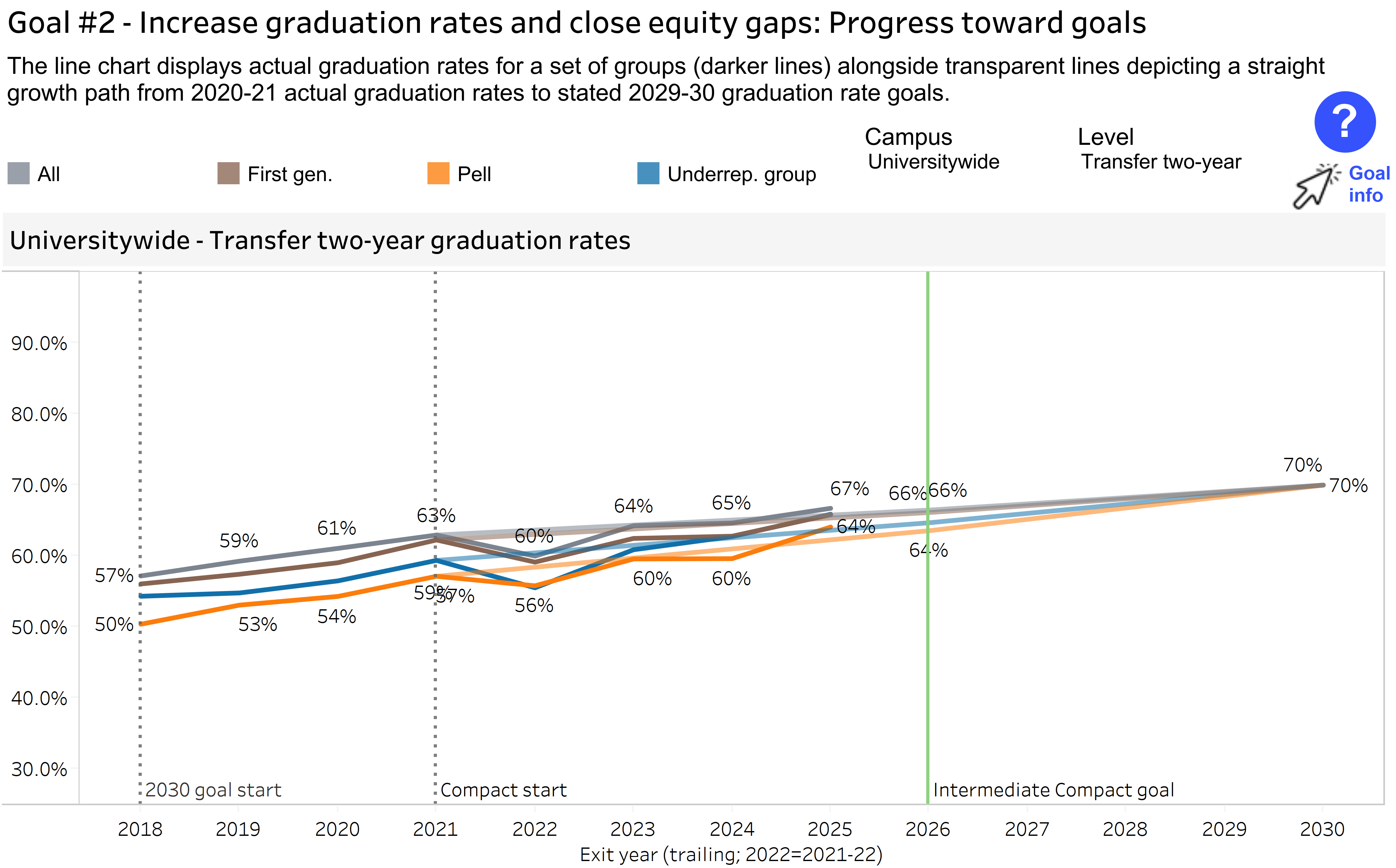
Transfer two-year graduation rates by student group and exit cohort year (4.2.1)
Advancing research and discovery
Under the California Master Plan for Higher Education, the state designated UC as the research arm of the state. The University’s already strong research enterprise was further accelerated by state investments in faculty hiring, allowing the University to attract top-tier researchers. The University is among the nation’s largest and most impactful research enterprises and is dedicated to tackling urgent problems that face the state and world, creating knowledge that improves lives, and innovating to keep America at the forefront of scientific and technological advancements. The University’s research enterprise is also vital to making California’s economy the fourth-largest in the world. UC research also spurs job growth, the launch of new companies and industries, creation of economic prosperity, and advancement in scientific breakthroughs that benefit the entire world.
In 2024, UC research expenditures exceeded $9.5 billion, including $5 billion in federally funded expenditures (9.1.1). Of that federal total, 65 percent was provided by the Department of Health and Human Services (HHS), which includes the National Institutes of Health (NIH). This funding has been pivotal in recent breakthroughs in areas such as Alzheimer’s and female fertility research. For example, UC Irvine scientists are engineering microglia — immune cells in the brain — to deliver therapies precisely where they are needed. This approach bypasses the blood-brain barrier, a major obstacle in treating neurological diseases.
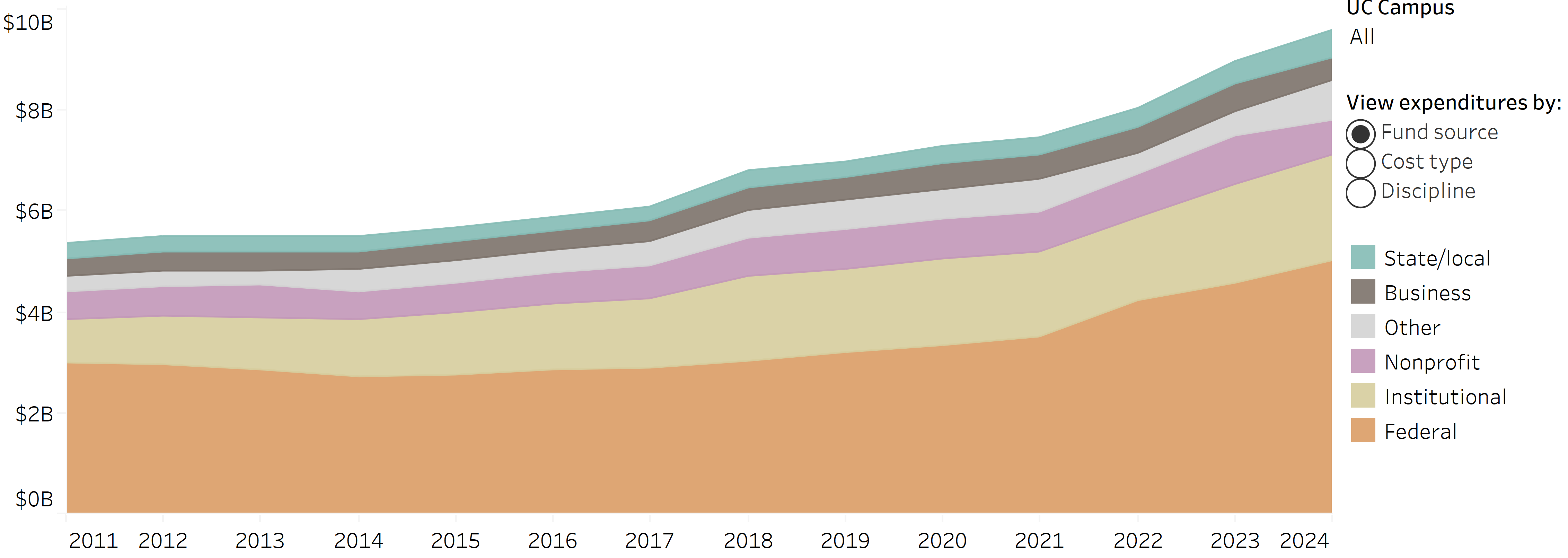
Total research expenditures by fund source, Universitywide, 2011 to 2024 (9.1.1)
UC’s research excellence is reflected in its global recognition, including 74 UC faculty who have received 75 Nobel Prizes, with four last year — a new world record. In addition, UC Faculty include 102 MacArthur “Genius” grant awardees, 66 National Medals of Science, and 15 Breakthrough Prize winners. UC is the #1 ranking institution for highly cited researchers worldwide on Clarivate’s 2025 Highly Cited Researchers List. This year’s rankings recognize 288 scientists across UC. To earn a spot on this list, scientists must have published multiple papers that rank among the top one percent of cited research in the past decade.
UC’s technology commercialization program takes inventions from the laboratory to the marketplace, benefiting the public by building alliances with industry to create innovative products for the world and to generate new businesses and jobs for California. UC had 1,942 inventions disclosed in fiscal year 2025 — an average of four new inventions every day (9.4.2). Bringing these advances to the marketplace is part of UC’s public service mission. UC inventions take two paths to the marketplace: they may be licensed to an existing company, or they may become the cornerstone of a new startup company. UC’s patents are commercialized under utility licenses (e.g., processes, machines) and plant licenses (e.g., plant cultivars). Every year since 2013, UC has topped the National Academy of Investors’ list of universities worldwide with the most U.S. utility patents.
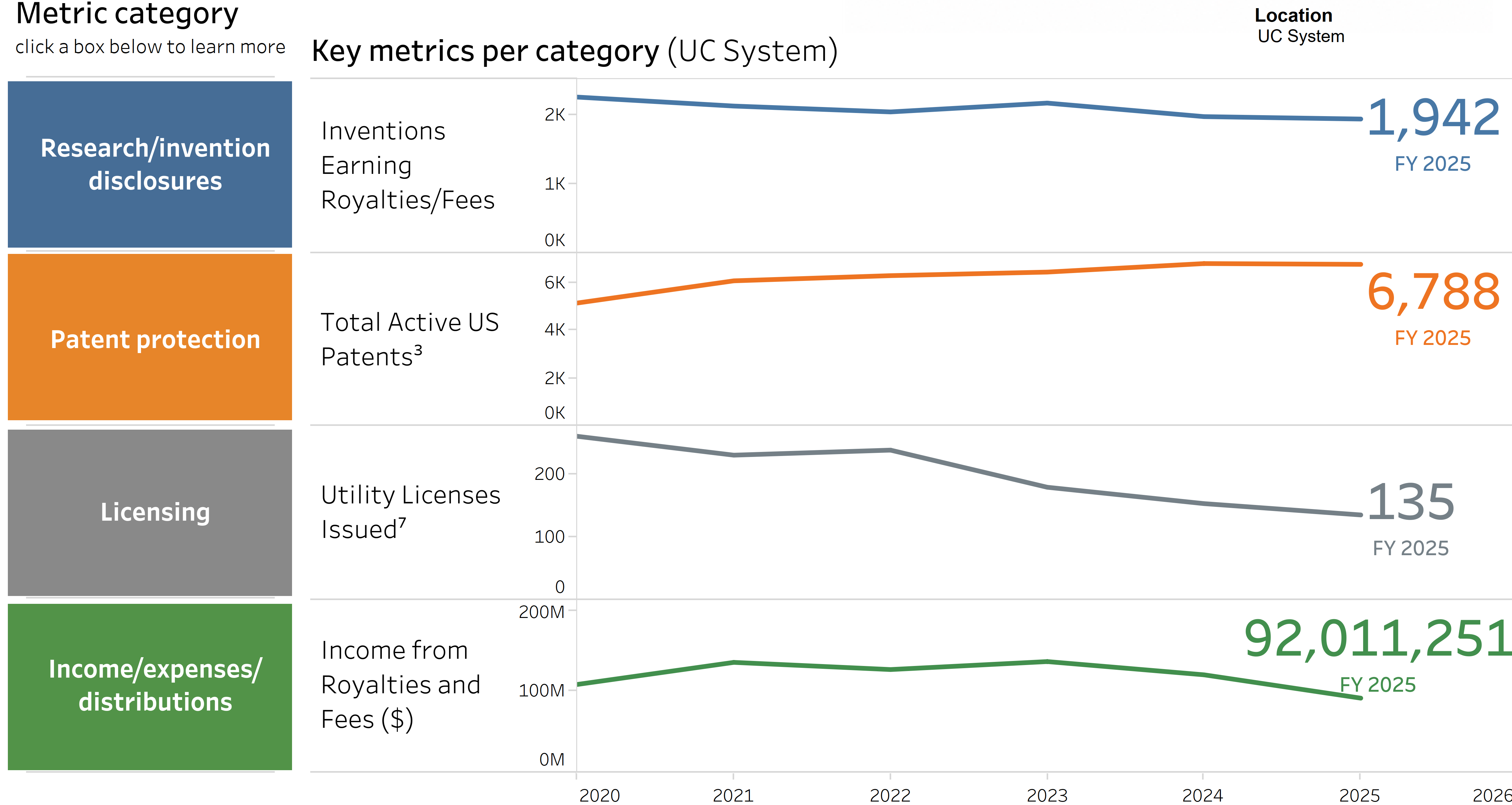
Licenses, research/invention disclosures, and patent protection (9.4.2)
UC also participates in almost 5,000 active clinical trials across the globe by direct sponsorship or facilities support. The University sponsors 1,296 clinical trials at UC and other facilities across the globe. In addition to these direct sponsorships, UC supports another 3,636 clinical trials by providing facilities and equipment resources to other institutions and entities conducting clinical trials in California, including biotechnology companies, nonprofits, colleges and universities, government agencies, and individuals. The thousands of clinical trials span 37 condition areas, ranging from cancers and chronic illnesses to neurological disorders and behavioral medicine, and counting over 2,500 specific conditions. For example, UC San Diego Health clinical trials provided patients with access to cutting-edge therapies that offered new hope during cancer treatment. For some participants, those trials led to significant improvements in their condition — including substantial tumor reduction and remission — while helping advance future cancer treatments for others.
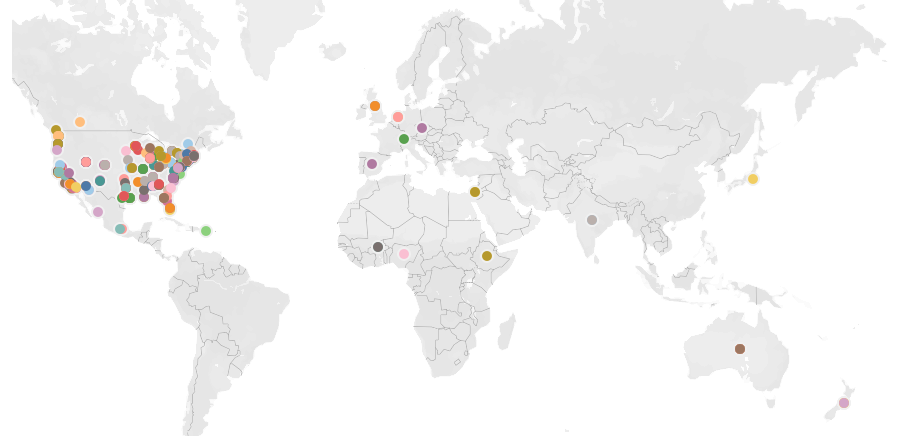
UC-affiliated clinical trials (10.1.2)
Improving the lives of California families
A key component of UC’s mission is to serve and improve the lives of all Californians — not just those who attend, graduate from. or work at the University. UC’s impact reaches every community in California. Through its graduates, research, health care, and public service, the University strengthens the state’s economy and improves quality of life. This year’s Accountability Report includes a new chapter to highlight UC’s statewide impact.
From the more than seven thousand UC-administered community-based program sites in California, the 47,000 acres of natural reserves set aside for research and conservation, to the tens of thousands of UC-trained health care professionals and the more than six million Medicaid visits provided annually by UC’s health enterprise, the University enriches every facet of Californian’s lives. The map below of the North San Joaquin Valley, along with thirteen other California regional maps, illustrate a holistic picture of this impact.
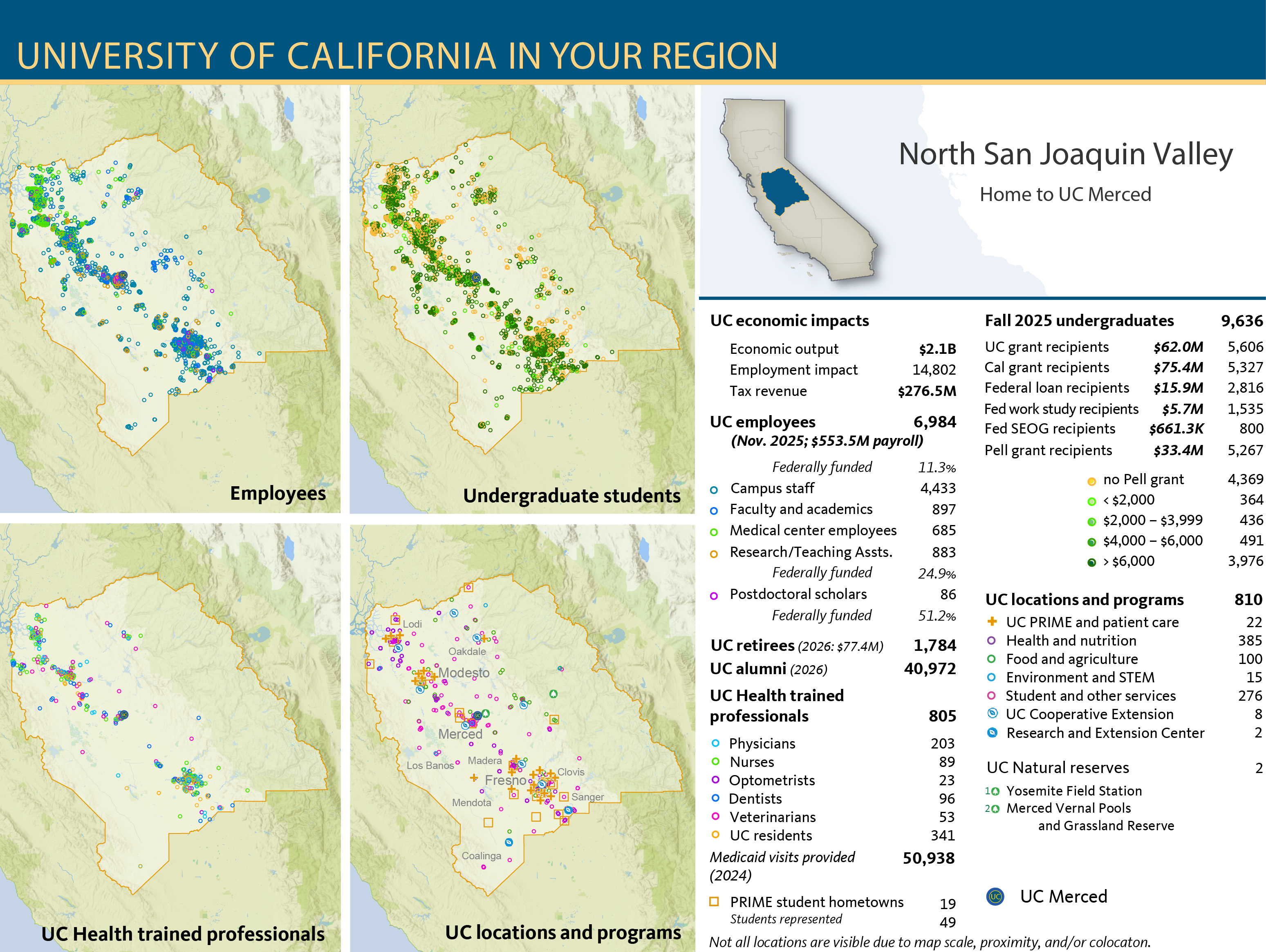
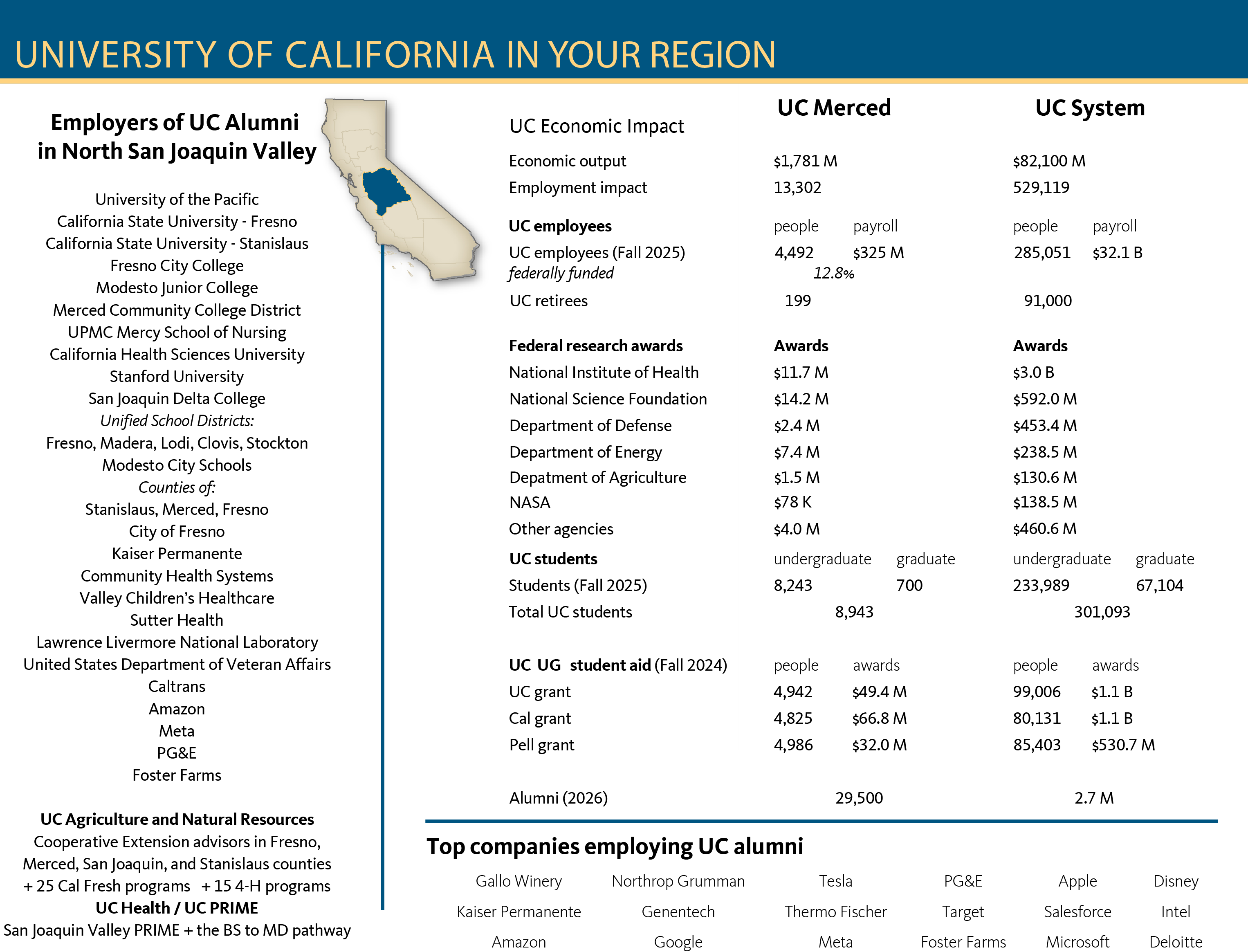
UC impact — a regional approach to demonstrating the University’s impact on communities (1.1.2)
UC Health is a cornerstone of California’s healthcare system — training future providers, caring for the state’s most complex patients, serving medical communities, and advancing medical innovation. In the last year, UC Health locations served patients from 99 percent of all California zip codes (1.4.2). Its continued strength is essential to California’s health and prosperity.
The University’s 21 health professional schools and six academic health centers train nearly 17,000 health care professionals annually (10.3.1). In the field of medicine, seventy percent of UC medical school graduates go on to practice as licensed physicians in California, contributing to California having the highest physician retention rate in the nation.
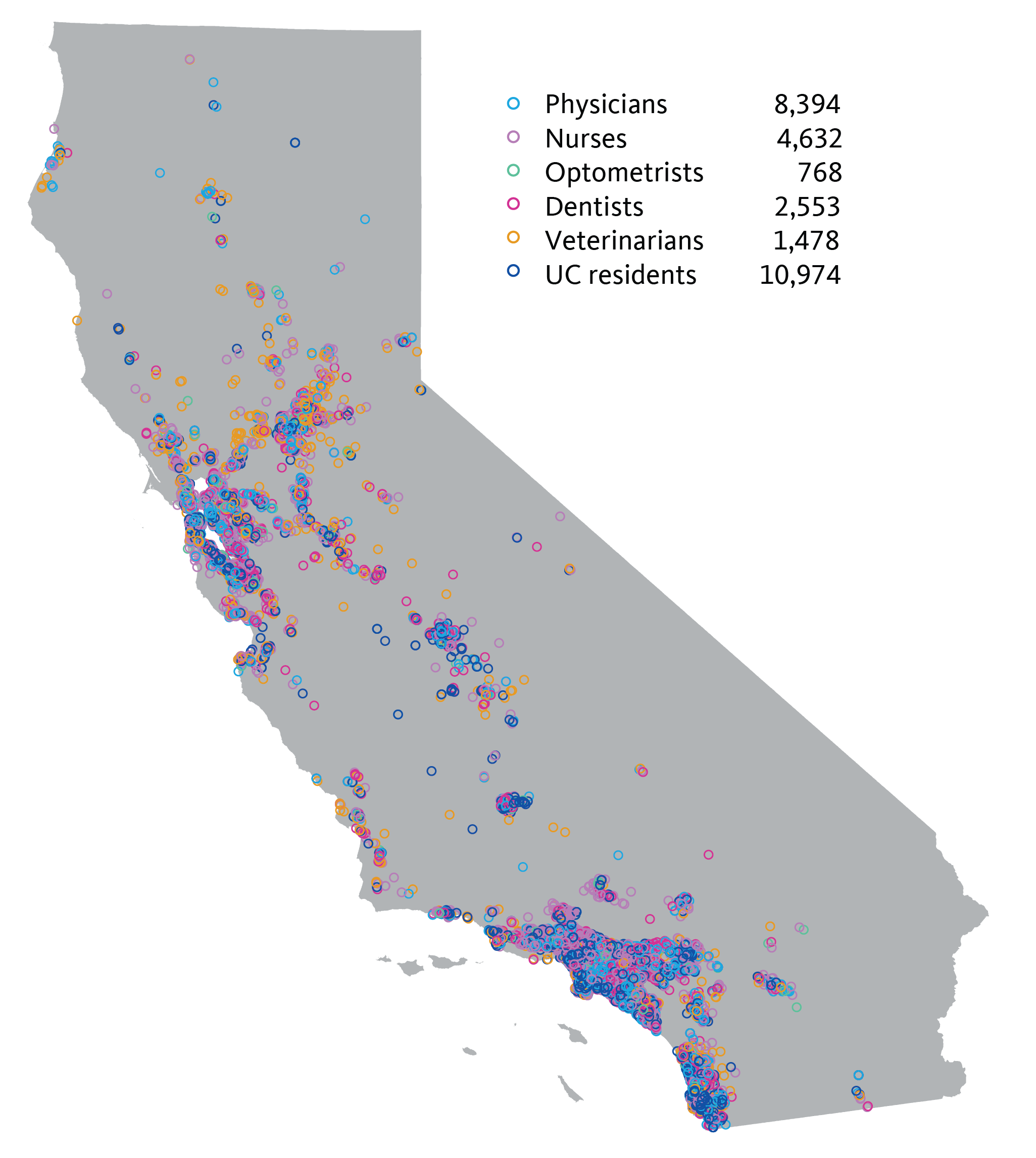
Location of 28,799 physicians, nurses, optometrists, dentists, veterinarians, and UC medical residents trained by UC since 1999 and currently licensed in California, 2023 (1.3.5)
In accordance with the University’s public service mission as a land grant university, UC Agriculture and Natural Resources (UC ANR) brings the power of UC research and education beyond campus borders to local communities across California. UC ANR operates the statewide UC Cooperative Extension (UCCE) network of 375 UCCE academics and 350 community educators, who serve as the University of California’s “community ambassadors,” delivering educational programs in every California county. (11.1.1). UC ANR manages and delivers California’s 4-H Youth Development Program in every county in California, operating at 413 sites with 75,467 youth from the ages of five to eighteen (11.1.2). Furthermore, UC ANR volunteers, including participants in the UC Master Gardener and UC Environmental Stewards Programs, have contributed to 1.5 million hours of public service across California, valued at $60,620,592 (11.1.3).
The annual UC Accountability Report provides a comprehensive and transparent assessment of the University’s progress in meeting its mission of teaching, research, health care, and public service. The report also serves as a critical tool for understanding the challenges facing the University and for guiding strategic planning, budgeting, and performance management. While this year’s report highlights the progress that the University has made in meeting its key goals, recent federal actions have created uncertainty regarding ongoing investments in UC research, Medicare, and federal financial aid. The continued partnership between UC and the state is critical for making further progress in the years ahead. With sustained state investments, UC can continue serving the people of California through opportunity, education, and discovery.
At the same time, the University must continue to adapt and meet the needs of a changing economy and society. This means engaging directly with the opportunities and challenges posed by emerging technologies such as artificial intelligence and quantum computing — not only for universities, but for our broader economy, our quality of life, and our democracy. It also means building on California’s Master plan for Higher Education to position UC and the state for leadership in the 21st century.
As the University navigates these challenges and opportunities, it will track and report the impact to UC students, faculty, and staff, along with UC’s efforts to serve the people of California and partner with state policymakers to strengthen and grow California’s economy while continuing to be a worldclass leader in education, research, and healthcare.
In support of its transparency efforts, the University of California produces the UC Accountability Report, along with the UC Information Center, with detail on University operations, including progress on strategic goals, areas of strength, and opportunities for improvement.