Federal funds currently support more than half of the research conducted at UC.
9.1.1 Total research expenditures by fund source, Universitywide, 2011 to 2024

Research expenditure comparisons dashboard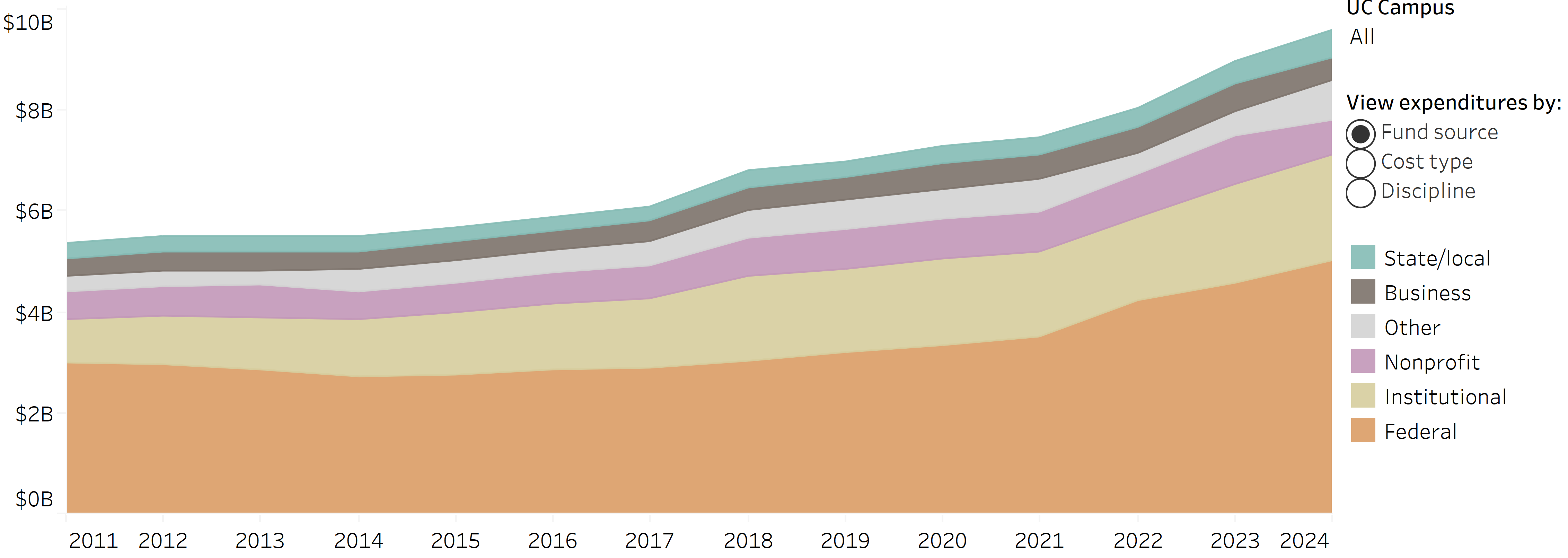
source: UC Information Center
In 2024, UC research expenditures exceeded $9.5 billion, including $5 billion in federally funded expenditures. Of that federal total, 65 percent was provided by the Department of Health and Human Services (HHS), which includes the National Institutes of Health (NIH). This concentration of federal support aligns with the fact that the majority of UC research expenditures are directed toward the life sciences, as seen in indicator 9.1.2.
Other agencies that fund federal research include the National Science Foundation (NSF), Department of Defense (DOD), Department of Energy (DOE), National Aeronautics and Space Administration (NASA), and United States Department of Agriculture (USDA).
While expenditures are the most common way of measuring research activity, they and other quantitative measures cannot fully capture how UC research contributes to the state, the nation, and the world. UC’s research enterprise enables UC students to actively participate in research and to receive instruction from the world’s foremost researchers. It makes discoveries available to healthcare, agriculture, and public service. It creates work in the arts and humanities that furthers understanding of our rich diversity and of our place in the world.
Life sciences represent sixty-five percent of research expenditures.
9.1.2 Total research expenditures by discipline, Universitywide, 2011 to 2024
Research expenditure comparisons dashboard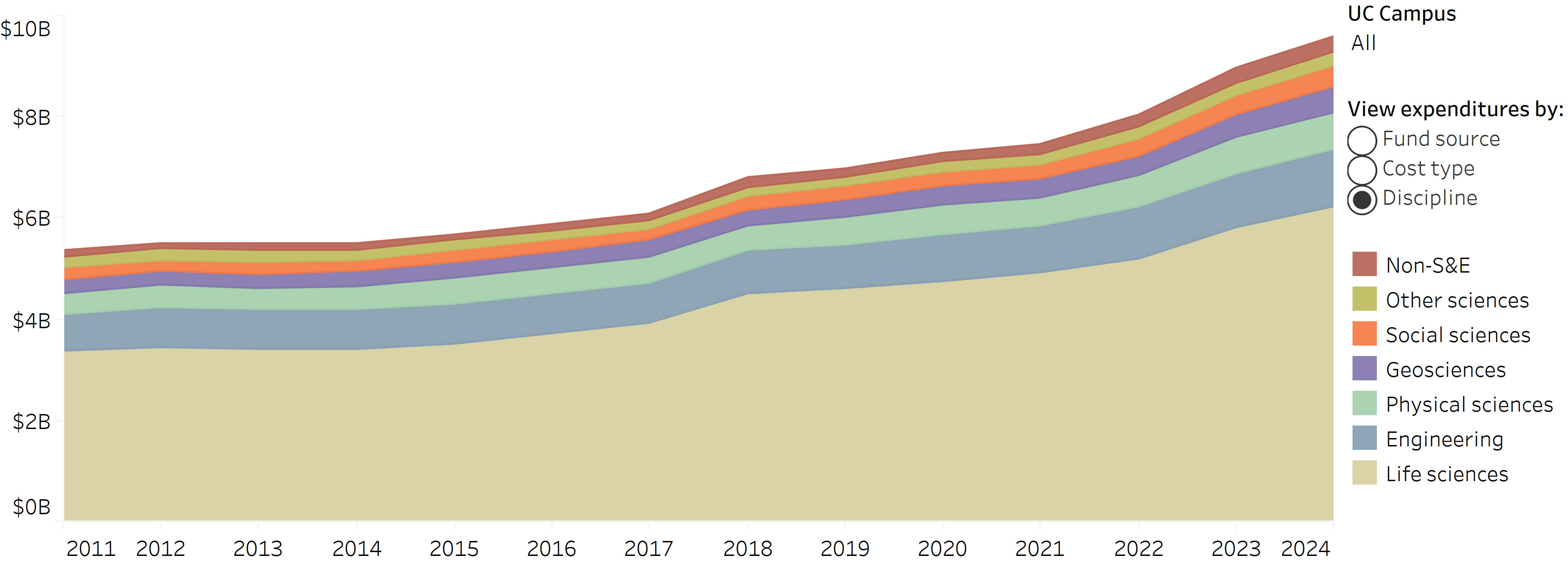
source: UC Information Center
The Department of Health and Human Services (HHS), which includes NIH, funds almost 45 percent of UC life science research expenditures. Funding from these agencies has been pivotal in recent breakthroughs in Alzheimer’s research at UC Irvine and female fertility research at UC San Francisco.
At UC Irvine, scientists are engineering microglia — immune cells in the brain — to deliver therapies precisely where they are needed. This approach bypasses the blood-brain barrier, a major obstacle in treating neurological diseases. NIH-funded research in this area could enable more targeted, personalized treatments for Alzheimer’s and related conditions.
At UC San Francisco, researchers have shown that age-related fertility decline may be more complex but more modifiable than previously thought, using advanced imaging and cell-sorting techniques. While declining egg quality has long been viewed as the primary driver, new findings highlight the critical role of surrounding ovarian cells and tissues in egg maturation and the pace of fertility decline. These insights may not only extend fertility but also improve broader health outcomes, as many age-related disease risks increase after menopause or ovary removal.
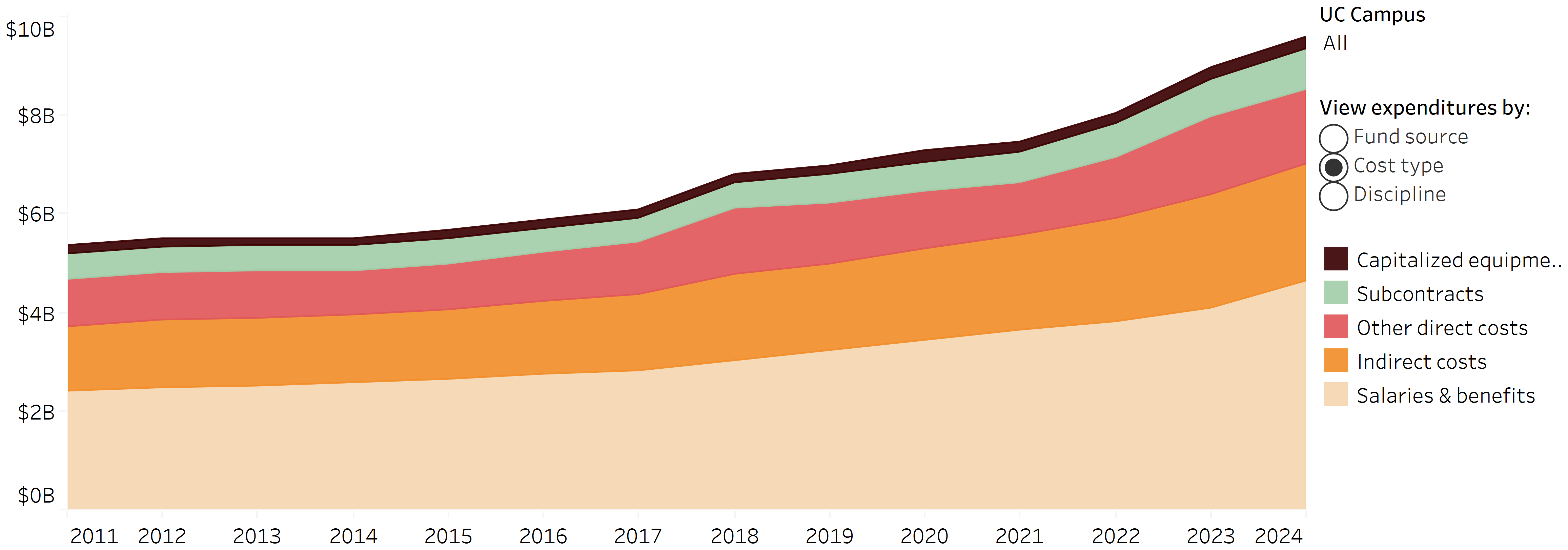
Salaries and benefits represent close to half of all research expenditures.
9.1.3 Total research expenditures by cost type, Universitywide, 2011 to 2024
Research expenditure comparisons dashboard
source: UC Information Center
Salaries and benefits include compensation for all research and development personnel, whether part time or full time, temporary or permanent. As a major driver of employment and economic activity, UC research funding supported over 71,000 research personnel (roughly 28,000 FTE) across the system in UC FY 2024. This figure includes researchers, research and development technicians, and research and development support staff, as defined by the NSF HERD survey.
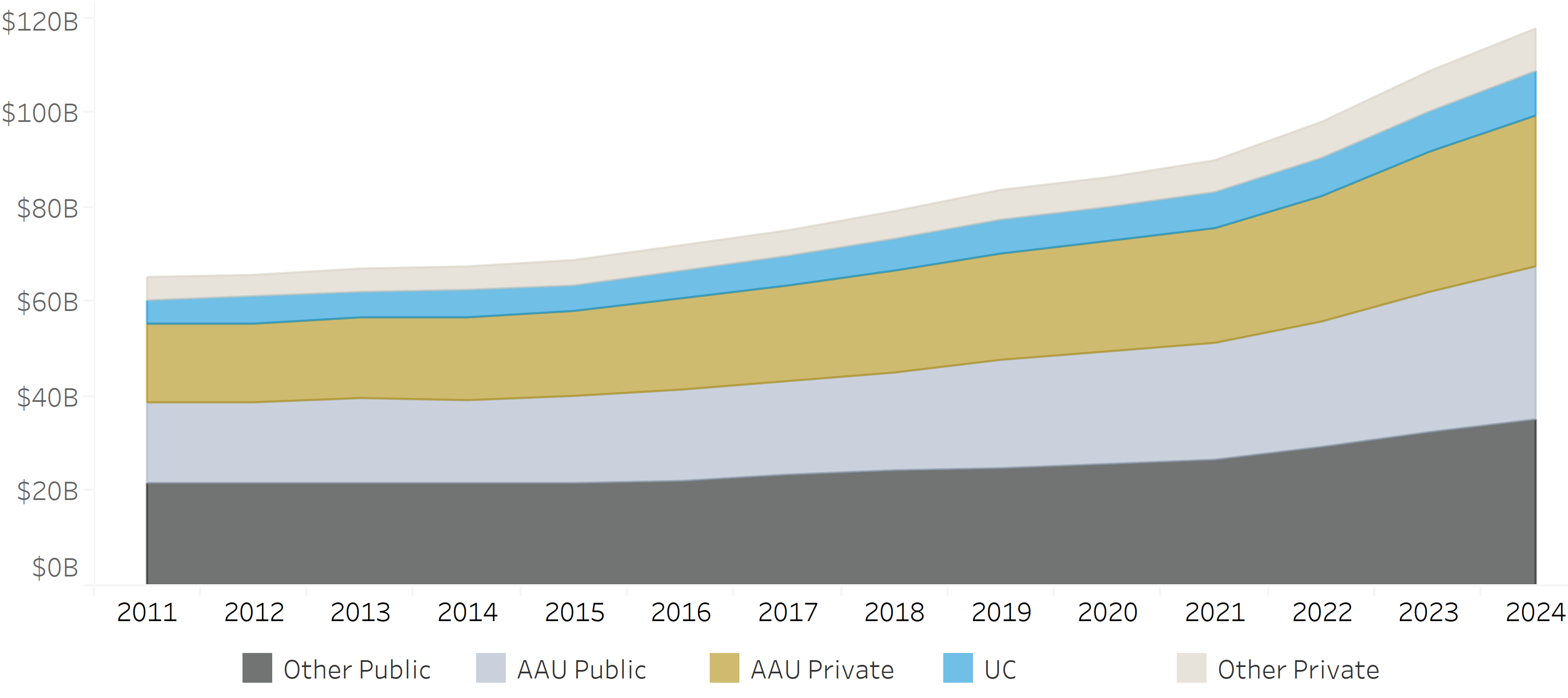
UC currently accounts for eight percent of direct research expenditures among institutions that participate in the Higher Education Research Expenditure survey.
9.1.4 Share of national research, US four-year universities, 2011 to 2024
Research expenditure comparisons dashboard
source: UC Information Center
UC has consistently accounted for just over eight percent of nationwide research expenditures since 2011. Compared to the 2011–2018 period, American Association of University (AAU) Public institutions outside of UC increased their share by an average of one percentage point between 2019 and 2024, while other public institutions saw their share decline by an average of two percentage points over the same period.
While AAU status does not directly equate to increased research funding, it enhances an institution’s research status by strengthening university reputation, faculty and graduate student recruitment and retention, federal research policy influence, and strategic alignment with other top research universities. All UC campuses are Carnegie Classified Research 1 (Very High Research Activity) and eight out of ten UC campuses are AAU members. (Note: UCSF can not qualify as an AAU institution because it does not enroll undergraduate students.)
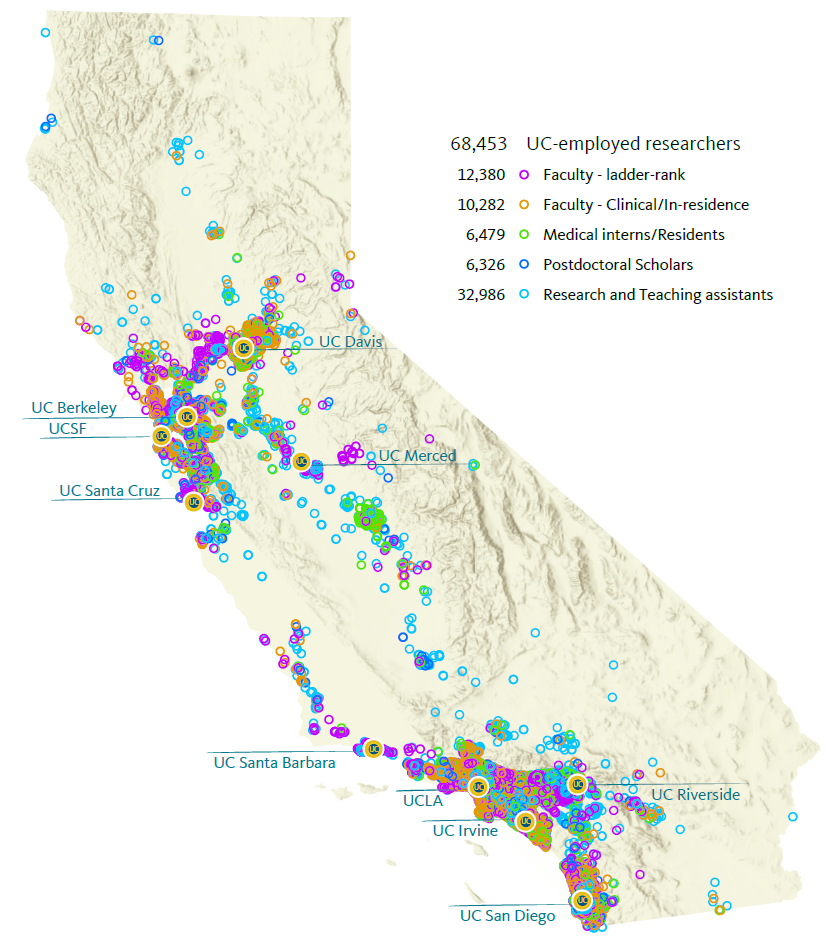
UC employs over 68,000 researchers across the state of California.
9.2.1 UC researcher locations, Fall 2025
source: UC Path
A wide variety of UC employees engage in research, including faculty, medical interns/residents, postdoctoral scholars, and research and teaching assistants. These employees work in labs on campuses, at medical centers, research centers and stations, and do research in the field across California.
note: The research personnel as reported in 9.1.3 are defined differently, following NSF HERD survey methodology.
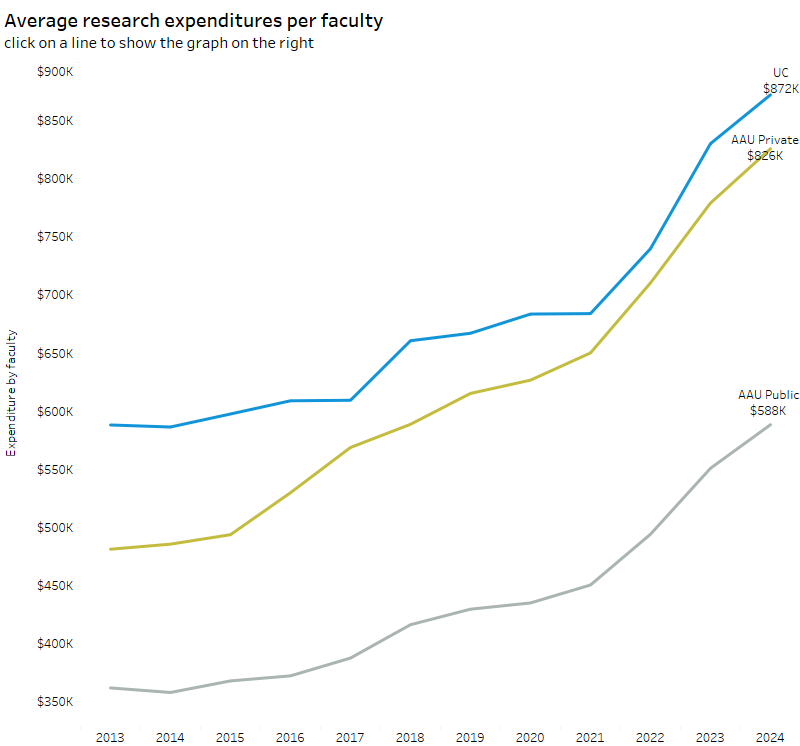
Average research expenditures per tenured or tenure-track faculty are higher at UC than its AAU public peers.
9.2.2 Average direct research expenditures per tenured or tenure-track faculty, UC and AAU comparison universities, 2013 to 2024
Research expenditure comparisons dashboard
source: UC Information Center
UC’s researcher excellence is reflected in its global recognition, including 75 Nobel Prizes, 102 MacArthur “Genius” grants, 66 National Medals of Science, and 15 Breakthrough Prizes. UC is the #1 ranking institution for highly cited researchers worldwide on Clarivate’s 2025 Highly Cited Researchers List. This year’s rankings recognize 288 scientists across UC. To earn a spot on this list, scientists must have published multiple papers that rank among the top one percent of cited research in the past decade.
UC’s average research expenditures per tenured or tenure-track faculty are notably high due to increased research activity at UC San Francisco, as seen in the following indicator.
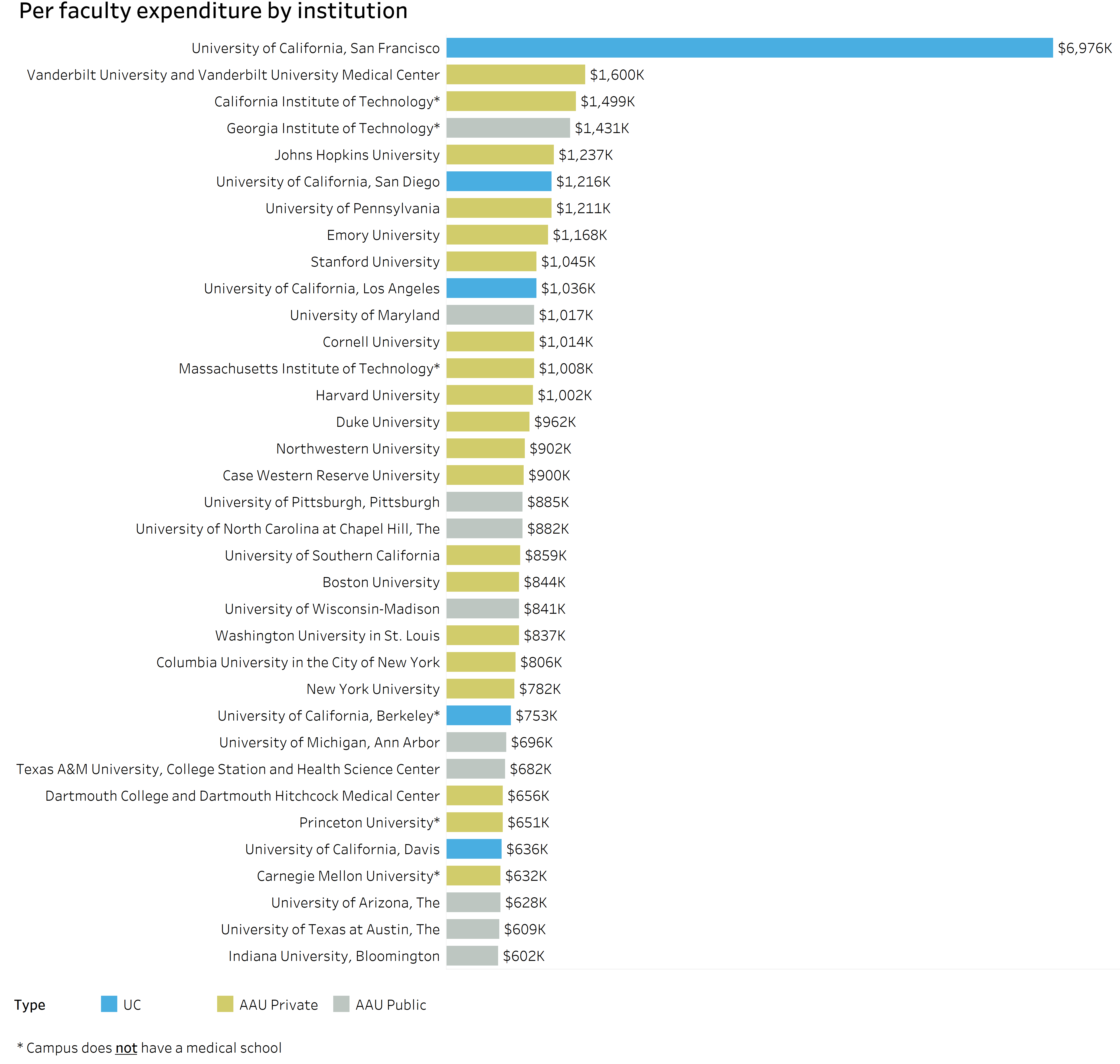
Average research expenditures per tenured or tenure-track faculty are particularly high at UC San Francisco, the only UC campus dedicated exclusively to the health sciences.
9.2.3 Average direct research expenditures per tenured/tenure-track faculty, top 35 institutions, 2024
Research expenditure comparisons dashboard
source: UC Information Center
While UC San Francisco has the highest average research expenditures per tenured/tenure-track faculty, UC San Diego, Los Angeles, Berkeley, and Davis also rank competitively against other public and private AAU institutions.
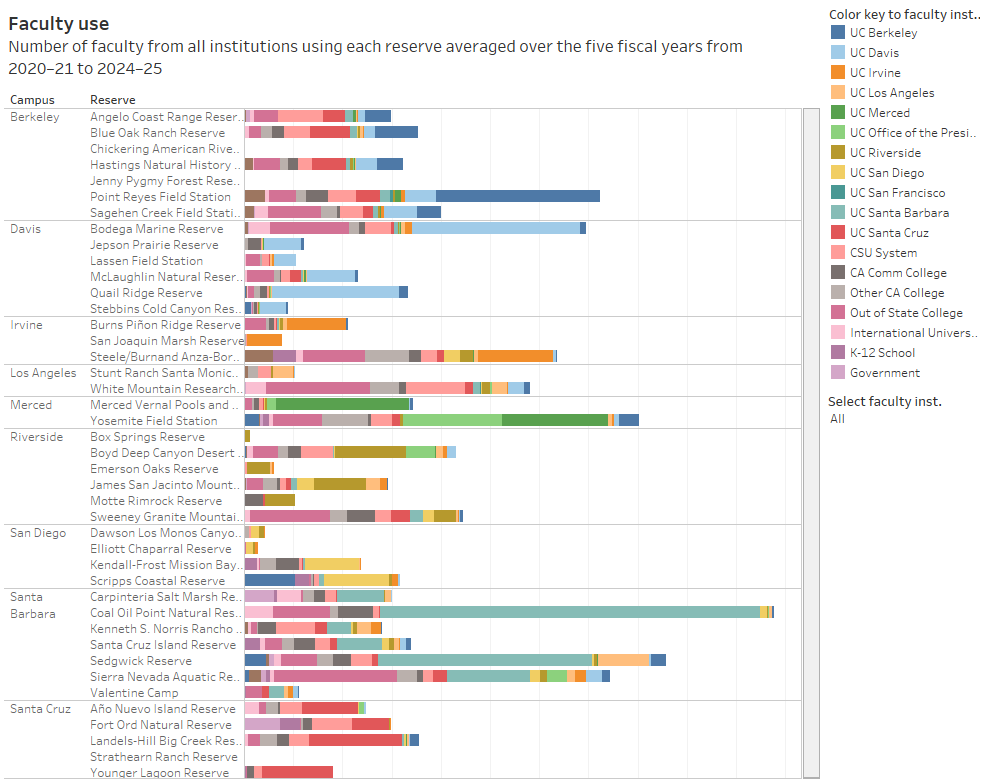
UC Nature has hosted an average of 4,041 researchers and 1,320 faculty to conduct research in nearly 50,000 acres of protected California habitat over the last five fiscal years.
9.3.1 UC Nature use data
UC Nature use data dashboard
source: UC Information Center
The UC Nature use data dashboard provides additional detail by campus.
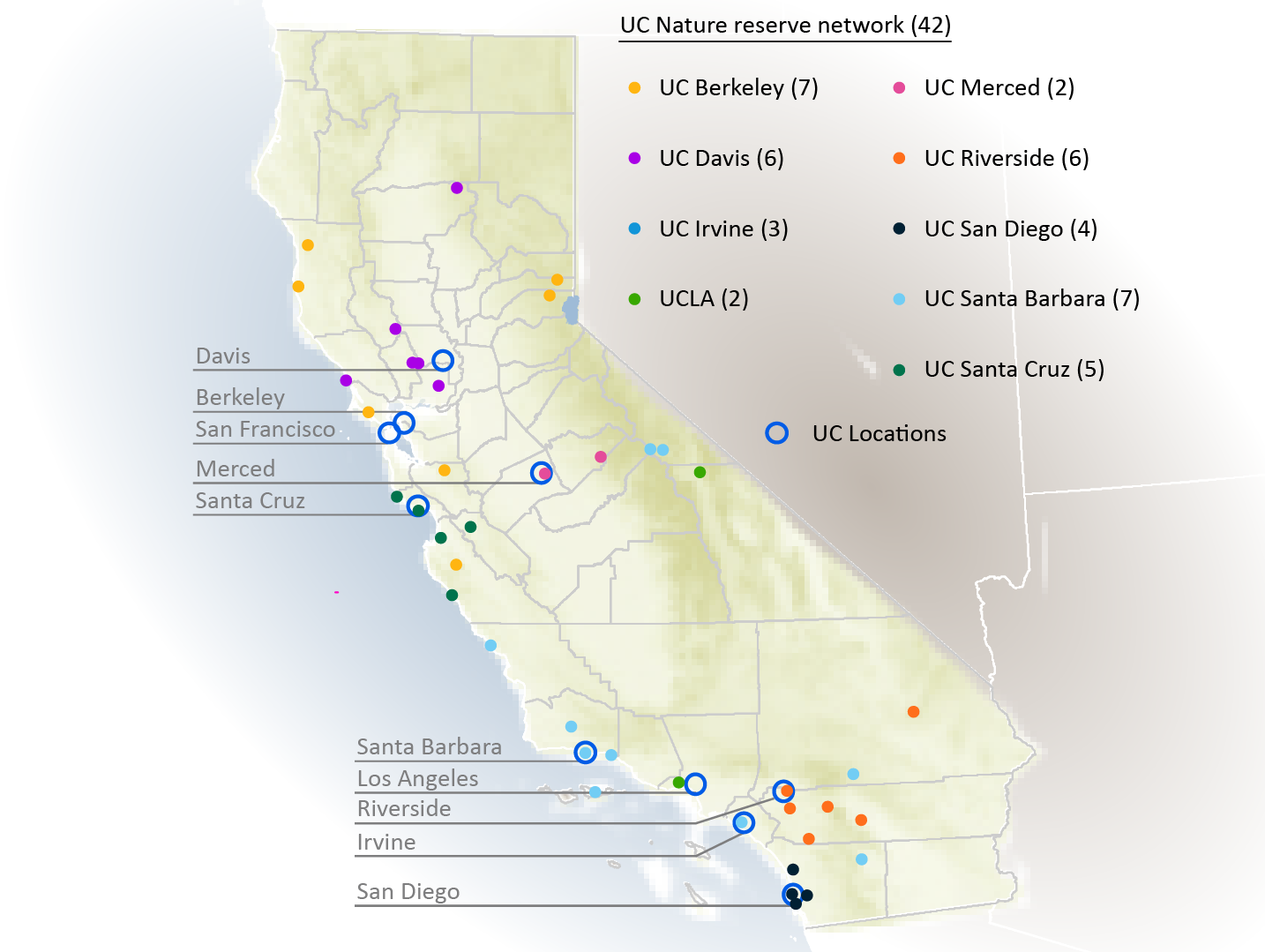
UC Nature is the largest field laboratory system in the world. Its 42 protected natural areas represent most of California’s major habitat types, including coastal tide pools, inland deserts, lush wetlands, and redwood forests, across nearly fifty thousand acres. Reserves support environmental research, provide immersive educational experiences to students, and connect the public with nature. Programs train the next generation of diverse scientists and leaders and provide real-time climate and biodiversity monitoring that helps realize state environmental goals. UC Nature works to ensure nature remains strong in the face of climate change, saving biodiversity, lives, and livelihoods within California and around the world.
UC’s off-campus research enterprise includes the UC Nature reserve network and UC National Laboratories.
9.3.2 UC Nature locations and campus affiliation
source: UC Nature
UC Nature brings the expertise and strengths of the University to communities across the state through research, educational programs, and policy leadership. In these and myriad other ways, UC Nature helps California address pressing environmental issues such as climate change, wildfire, and conservation while training the next generation of scientists and land stewards.
The UC National Laboratories also produce a variety of research. As a service to the nation that spans more than 80 years, the Regents of the UC have a long and rich history in the management and operation of these three U.S. Department of Energy (DOE) national laboratories: Lawrence Berkeley National Laboratory (Berkeley Lab or LBNL) since 1931, Los Alamos National Laboratory (LANL) since 1943, and Lawrence Livermore National Laboratory (LLNL) since 1952. LBNL’s mission is to create advanced new tools for scientific discovery and to work on problems of great scale, enabling transformational solutions for energy, health, and environment. LLNL has a mission of strengthening the United States’ security through development and application of world-class science and technology to: enhance the nation’s defense; reduce the global threat from terrorism and weapons of mass destruction; and respond with vision, quality, integrity, and technical excellence to scientific issues of national importance. LANL's mission is to develop and apply science and technology to ensure the safety, security, and reliability of the U.S. nuclear deterrent; reduce global threats; and solve other emerging national security and energy challenges.
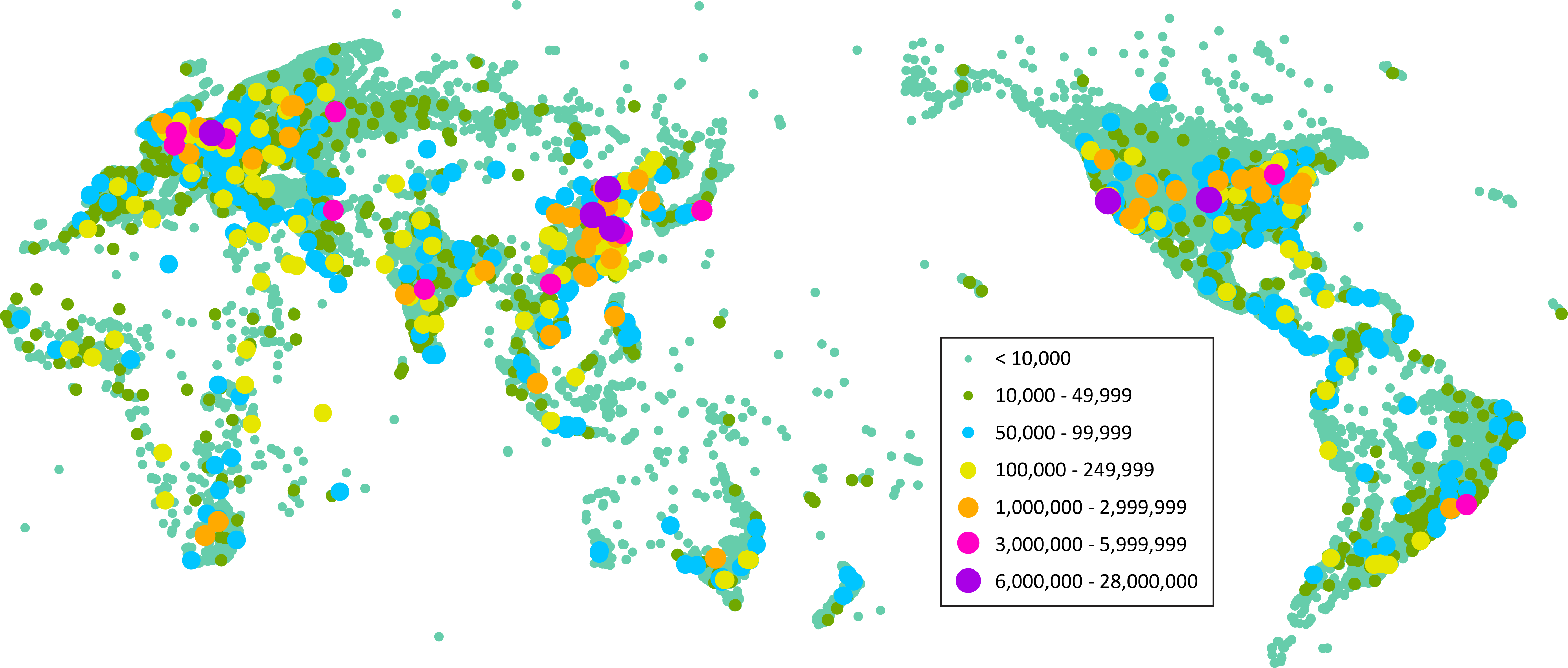
UC’s eScholarship Repository provides public access to more than 500,000 UC research publications, viewed by readers in 98 percent of the world’s countries.
9.4.1 eScholarship downloads and deposits of UC scholarly materials, through May 2026
source: California Digital Library
This map shows the geographic distribution and concentration of views for scholarly materials in eScholarship, UC’s open access (OA) publishing platform and institutional repository managed by the California Digital Library. eScholarship contains over 525,000 individual items, including research articles, working papers, and electronic theses and dissertations, as well as over 90 open access journals that are published on the platform. Since 2002, UC-sponsored research and journals in eScholarship have been viewed and/or downloaded over 180 million times by readers in more than 175,000 locations in 98 percent of the world’s countries across all seven continents.
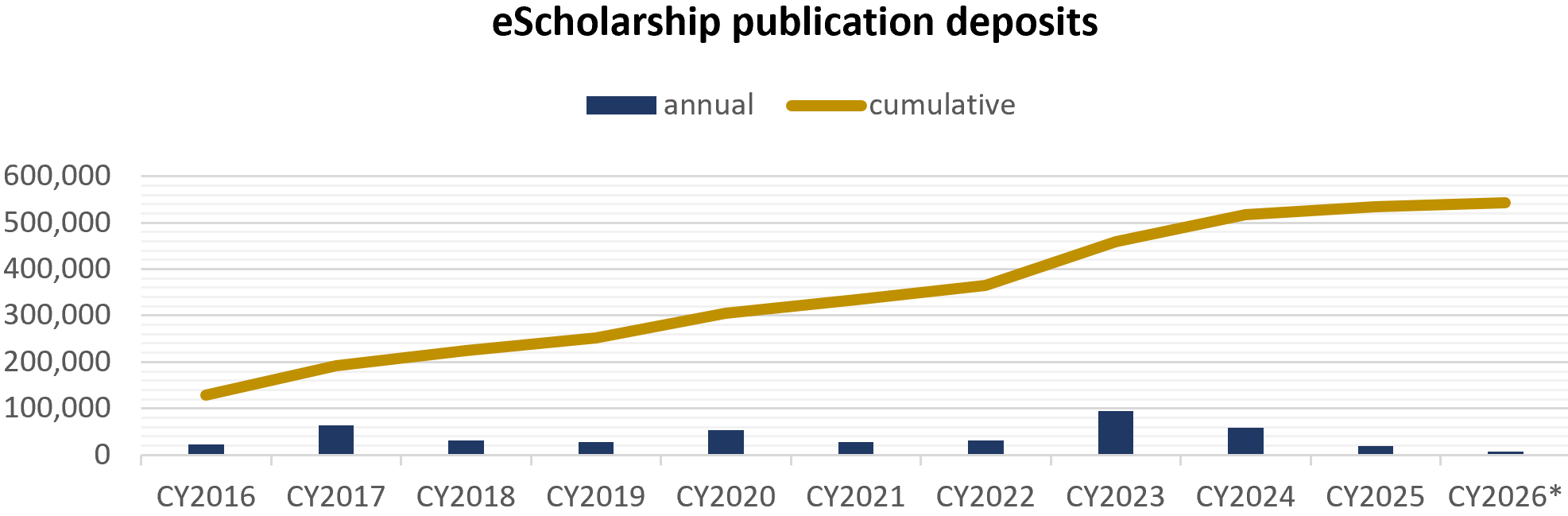
*partial year data
** the data presented here should be considered
approximate and subject to revision.
Learn more: escholarship.org
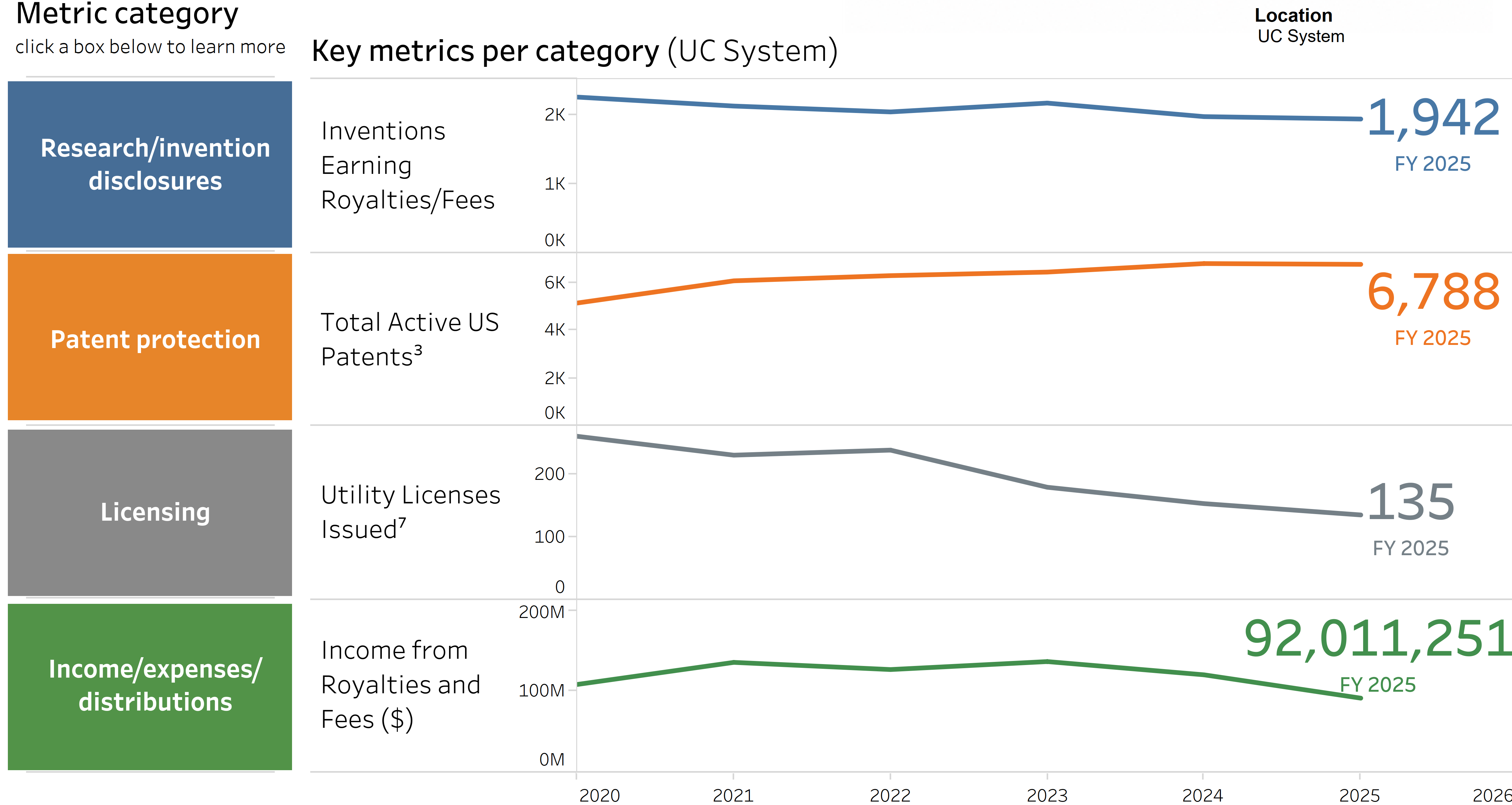
UC’s technology commercialization program takes inventions from the laboratory to the marketplace, benefiting the public by building alliances with industry to create innovative products for the world and generate new businesses and jobs for California.
9.4.2 Licenses, research/invention disclosures, and patent protection
UC inventions at a glance dashboard
source: UC Information Center
Invention commercialization promotes technological advances, generates economic benefits, and helps support UC’s research enterprise. On average, UC research generates four new inventions every day; bringing them to the marketplace is part of the UC public service mission. UC inventions take two paths to the marketplace: they may be licensed to an existing company or they may become the cornerstone of a new startup company.
This process generates jobs, attracts investment, and fosters new sectors of economic activity. For the third year in a row, UC Berkeley is the nation’s top performer in generating startups, with their undergraduate alumni founding more venture backed companies than any other university in the world. UC Los Angeles, San Diego, Santa Barbara, Davis, and Irvine were also among the world’s top 100 universities for undergraduate alumni who started venture-backed businesses. Every year since 2013, UC has topped the National Academy of Investors’ list of universities nationwide with the most U.S. utility patents.
UC faculty and alumni were also behind 13 of TIME’s Best Inventions of 2025. These innovations could help cure baldness, control tremors in people with Parkinson’s disease, and offer a new biological tool for protecting endangered species, among others.
For more information
Explore the UC Information Center dashboards that provide downloadable data and context on UC Research activities with this subject area-specific url:
universityofcalifornia.edu/about-us/information-center#research
Some examples include:
- Awards and proposals
Summary charts and data tables of sponsored project awards and proposals, including breakout tabs of federal and state funding
- Award explorer
Externally funded research awards
- UC clinical trials
Active clinical trials affiliated with UC. An indicator about clinical trials is in chapter 10: University of California Health
Other resources
Download data tables for chapter 9 indicators (Excel format)
Chapter Nine: Research
Key takeaways:
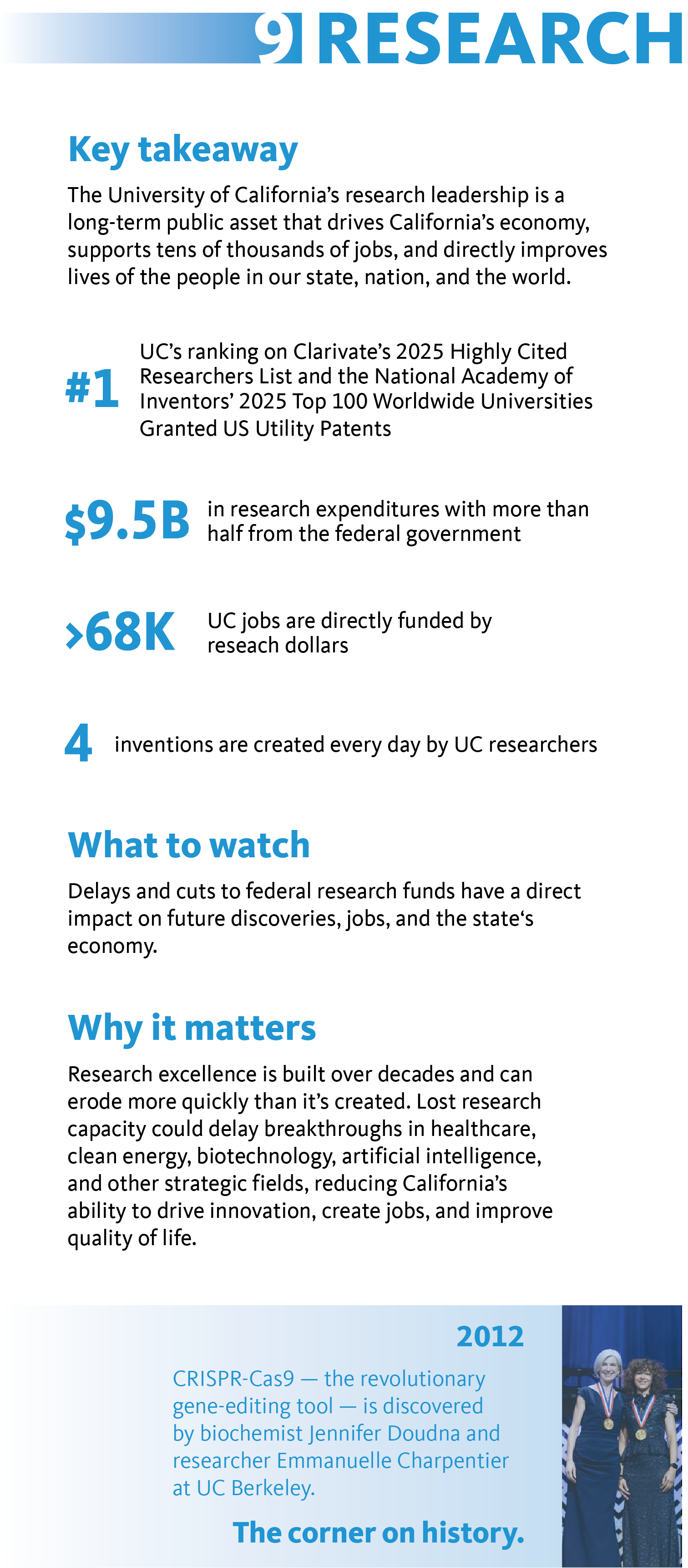
- The University of California’s research leadership is a long-term public asset that drives California’s economy, supports tens of thousands of jobs, and directly improves lives of the people in our state, nation, and the world.
- UC is ranked number one on Clarivate’s 2025 Highly Cited Researchers List and the National Academy of Inventors’ 2025 Top 100 Worldwide Universities Granted US Utility Patents.
- UC has $9.5 billion in research expenditures with more than half from the federal government.
- More than 68,000 UC jobs are directly funded by research dollars.
- Four inventions are created every day by UC researchers.
What to watch:
Delays and cuts to federal research funds have a direct impact on future discoveries, jobs, and the state’s economy.
Why it matters:
Research excellence is built over decades and can erode more quickly than it’s created. Lost research capacity could delay breakthroughs in healthcare, clean energy, biotechnology, artificial intelligence, and other strategic fields, reducing California’s ability to drive innovation, create jobs, and improve quality of life.
UC’s corner on history:
In 2012, CRISPR-Cas9 — the revolutionary gene-editing tool — is discovered by biochemist Jennifer Doudna and researcher Emmanuelle Charpentier at UC Berkeley.